


Key cautions
- Avoid alcohol and sedative combinations without professional advice. Medicinal valerian can impair driving and machinery use.
- Not recommended medicinally in pregnancy/breastfeeding or under age 12. Long-term safety is uncertain; discuss stopping after chronic use.
What’s inside
Valerenic acids and other sesquiterpenes, volatile compounds, lignans and variable valepotriates. Valepotriates are unstable during storage/processing and may be absent from finished extracts; no single constituent reliably predicts clinical sleep benefit.
EMA: Valerian root and essential-oil assessment report (2016)
Uses in brief

- Traditional: helping sleep and mild nervous tension.
- Human evidence varies by extract; reliable benefit for chronic insomnia is not established.
History, folklore and reported uses
Sleep and nervous settling
Medicines made from valerian roots and underground stems have a long European history for sleeplessness and settling the nerves. Leiden’s botanical garden records their medieval reputation, while NCCIH traces medicinal use to early Greece and Rome. Modern products particularly emphasize this calming identity.
Hortus botanicus Leiden: Valeriana officinalis · NCCIH: Valerian
Migraine and headache
NCCIH includes migraine among valerian’s historical indications. The medicinal material was the roots and underground stems, used within the plant’s broader European nervous-system remedy tradition.
Stomach cramps
Valerian’s historical repertoire also included stomach cramps, as recorded by NCCIH. Root and underground-stem preparations belonged to a wider antispasmodic tradition as well as to the household treatment of sleeplessness.
Fatigue and debility
Older medicinal practice used valerian root and underground-stem preparations for fatigue. NCCIH’s history records this restorative use alongside sleeplessness, migraine and stomach cramps.
Protective amulets and devil lore
Leiden records regional beliefs that valerian worn around the neck could ward off plague. West Frisian folklore blamed its strong smell on an angry devil, upset that the plant’s healing powers had kept people alive. Cats’ attraction to valerian produced an old Dutch name meaning cat herb; other regional stories credited it with unusual success in catching trout.
Hortus botanicus Leiden: Valeriana officinalis · CDC: Clinical Care of Plague
Regional reading paths
These sourced notes describe cultivation, trade, food traditions or material history. A regional connection does not claim exclusive origin.
Europe
Traditional processing/use: European root preparations assessed by EMA.
Root is used in regulated herbal products; evidence and cautions depend on preparation.
Identity & detailed reference
Identity
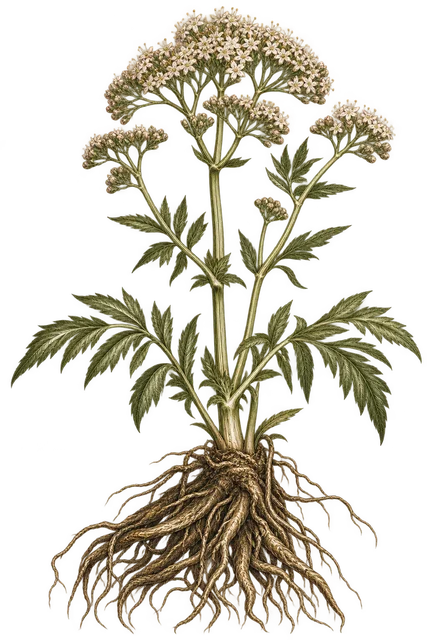
Valeriana officinalis L.; underground parts, principally rhizome and roots with stolons, in Caprifoliaceae. Older references often use the family name Valerianaceae.
Ingredient details, preparation and research
Source plant or material
Valeriana officinalis L.; dried underground parts (Valerianae radix).
Plant family / material: Caprifoliaceae (honeysuckle family); formerly often Valerianaceae.
Forms and route
Cut-root infusion, powdered root, dry and liquid extracts/tinctures; some authorized traditional bath additives. Valerian essential oil is a separate preparation and is not a drop-for-drop substitute for root products.
Vitamins and minerals
The reviewed medicinal products and trials are characterized by root/extract or chemical-marker amounts, not a dependable vitamin/mineral serving. Valerian tea, tinctures and bath products should not be counted as nutritional supplements.
Absorption and preparation
In six healthy adults, valerenic acid peaked about one to two hours after one oral preparation in five participants. Measuring this marker does not establish onset of sleepiness or compare all extracts. No validated fat, food or herb-pairing strategy was identified to improve practical benefit.
Practical preparation
Use a labeled cut-root tea or manufactured root product and follow its own preparation instructions. Infuse and strain the tea as directed rather than converting a capsule weight into spoonfuls. Do not drink bath additives or add essential-oil drops as a substitute for root tea.
Combination notes
Valerian is found with lemon balm, passionflower or hops in traditional or manufactured sleep products. A result for one fixed product does not validate a homemade mixture or prove each ingredient helps; avoid stacking full separate products and check sedative medicines/alcohol.
Traditional and reported uses
- Historical Greek/Roman use includes sleeplessness, stomach cramps, fatigue and migraine; historical listing does not establish effectiveness for each condition.
- Traditional oral use is for mild mental stress and helping sleep.
- EMA gives preparation-specific well-established-use status to certain dry ethanolic extracts; NCCIH finds overall sleep evidence inconsistent.
- Some traditional products are bath additives; this is not proof of transdermal nutrient delivery or equivalence to oral extracts.
Contraindications and cautions
- Medicinal valerian may impair driving and machinery use; follow label restrictions and do not drive if sleepy or slowed.
- Avoid taking with alcohol or sedatives unless a clinician has reviewed the combination. Additive sedation is possible, although not conclusively quantified.
- Headache, stomach upset, mental dullness, agitation and vivid dreams can occur.
- Long-term safety is uncertain. Withdrawal-like symptoms have occasionally followed abrupt discontinuation after chronic use; discuss a stopping plan, especially before surgery.
- Rare liver-injury reports exist, often with mixed herbal products. Jaundice or dark urine needs medical assessment.
- Pregnancy/breastfeeding use and medicinal use under 12 are not recommended. Persistent or worsening sleep problems need assessment.
Similar items and how they compare
- Passionflower
Both are traditional bedtime herbs sold as teas and extracts, and their potential drowsiness matters when combined with sedatives.
Valerian uses underground parts; passionflower uses flavonoid-containing aerial parts with different constituents.
- Lemon balm
Both have traditional use for mild nervous tension and sleep routines, with tea and extract forms that vary chemically.
Lemon balm is a lemon-scented leaf; valerian root has a distinct, stronger odor.
Plant, family and medicinal part
Valeriana officinalis L.; underground parts, principally rhizome and roots with stolons, in Caprifoliaceae. Older references often use the family name Valerianaceae. This entry concerns medicinal underground parts rather than ornamental lookalikes or another Valeriana species.
History and current use
Sleep and nervous-tension use has a long history; migraine, fatigue and stomach-cramp use is also historically recorded. EMA distinguishes certain dry ethanol extracts from other preparations supported chiefly by traditional use. That preparation-specific recognition does not make every root tea a proven chronic-insomnia treatment.
Human sleep research and uncertainty
In a randomized crossover study of 16 older women with insomnia, valerian did not outperform placebo on self-reported sleep, laboratory recordings or estimates from a movement monitor after either one dose or two weeks. Other trials differ in products and results. NCCIH describes overall evidence as inconsistent and notes that sleep-medicine guidance advises against valerian for chronic insomnia in adults.
Constituents and laboratory effects
Valerenic acids, volatile terpenes and lignans are among the characterized compounds. GABA-related and other effects in laboratory systems do not establish a single active ingredient or equivalent human exposure. Unstable valepotriates can degrade during storage and preparation, so claims based on isolated compounds must not be applied automatically to a finished root tea.
Absorption and realistic nutrition
In six healthy adults, valerenic acid peaked about one to two hours after one oral preparation in five participants. Measuring this marker does not establish onset of sleepiness or compare all extracts. No validated fat, food or herb-pairing strategy was identified to improve practical benefit. This marker study does not establish a dietary micronutrient benefit. Neither the aroma of the root nor a standardized marker percentage is a measure of nutritional value.
Simple preparations and bath distinction
Use a labeled cut-root tea or manufactured root product and follow its own preparation instructions. Infuse and strain the tea as directed rather than converting a capsule weight into spoonfuls. Do not drink bath additives or add essential-oil drops as a substitute for root tea. For a labeled traditional bath product, respect its contraindications: open wounds, substantial skin disease, fever/severe infection or serious circulatory/heart problems require avoidance or medical advice. No home essential-oil bath-drop formula is established here.
Sedation, medicines and driving
Do not use alcohol to intensify the effect. Combining with sleeping medicines or other sedating products needs individual review. EMA warns against driving or machinery use with medicinal valerian. Reports of agitation or vivid dreams show that feeling sedated is not universal. Tell the surgical team about ongoing use rather than making an abrupt long-term-use change on your own.
Long-term safety and special groups
Pregnancy, breastfeeding and medicinal use below 12 lack sufficient safety support. Rare reported liver injury is often difficult to attribute because multiple herbs were taken. Long-term safety is uncertain and withdrawal-like symptoms have sometimes followed chronic use; get advice for a stopping plan. Persistent insomnia deserves assessment of its cause.
Related herbs and combinations
Valerian is found with lemon balm, passionflower or hops in traditional or manufactured sleep products. A result for one fixed product does not validate a homemade mixture or prove each ingredient helps; avoid stacking full separate products and check sedative medicines/alcohol. Lemon balm contributes aromatic leaf; passionflower contributes aerial vine herb. These are practical comparisons, not interchangeable doses.
Entry sources
- NCCIH: Valerian, usefulness and safety (May 2025)
- EMA: Valerian root, preparation-specific conclusions and precautions
- EMA: Valerian root and essential-oil assessment report (2016)
- Kew: Valeriana officinalis L., accepted name and Caprifoliaceae family
- Anderson et al. (2005): Valerenic-acid pharmacokinetics in six healthy adults
- Taibi et al. (2009): Randomized valerian trial in 16 older women with insomnia
- LiverTox: Valerian and rare liver-injury reports
- EU official traditional-use entry: Valeriana officinalis root preparations, precautions and bath use
- EMA: Final assessment of traditional sedative herbal-tea combinations, Species sedativae
Reference entry 18 · Recorded content review: 2026-10-05 · Review scope and dates