


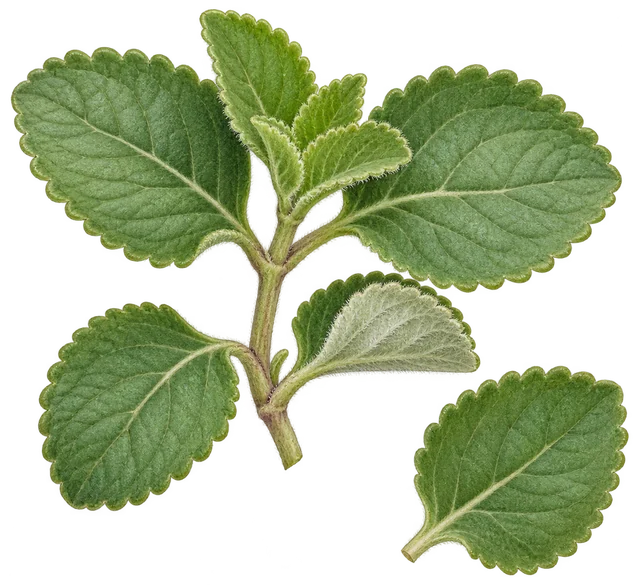
Key cautions
- The cited lactation evidence does not establish medicinal-use safety during pregnancy; postpartum traditions must not be extrapolated to pregnancy.
- Do not use a cultural uterine-cleansing belief to manage postpartum bleeding, fever or infection.
- Concentrated extracts and essential oil are separate from culinary cooked leaves.
What’s inside
Aromatic leaf constituents vary by plant and preparation. No essential-oil composition or food nutrient quantity is assigned to all cooked-leaf dishes.
Uses in brief

- Leaf seasoning for meat and beans.
- Bataknese postpartum leaf-food tradition; milk-supply efficacy unestablished.
History, folklore and reported uses
History, folklore and traditional uses
Damanik’s 2009 focus groups in Simalungun, North Sumatra, documented Bataknese postpartum nourishment, milk-stimulation and uterine-cleansing beliefs.
Source-plant context only; the cited NParks account does not identify the medicinal part. NParks records cough-related traditions in Indonesia, the Philippines and India, and use for swelling in Taiwan. These are reported practices, not established treatments; laboratory anti-inflammatory research does not validate a household leaf remedy.
Traditional, historical and reported uses
- Lactation / milk-supply tradition
Traditional accountWhy this label?
Low-quality studies and a synthesis suggest a possible milk-volume effect; infant-growth benefit remains uncertain.
Leaf food is eaten in the postpartum period to restore strength and encourage milk. Uterine cleansing is a reported cultural belief, not a demonstrated medical effect. Low-quality studies and a synthesis suggest a possible milk-volume effect; infant-growth benefit remains uncertain.
- Seasoning meat and beans
Food or household practiceWhy this label?
Singapore NParks records the leaves as a flavouring for meat and bean dishes, particularly in Caribbean cooking. The thyme-and-oregano-like aroma explains several common names, without making it true thyme or oregano.
Singapore NParks records the leaves as a flavouring for meat and bean dishes, particularly in Caribbean cooking. The thyme-and-oregano-like aroma explains several common names, without making it true thyme or oregano.
Coverage reflects verified sources, without a minimum use quota.
Women’s Health: traditions, evidence and cautions
Historical use does not establish benefit or safety. Pregnancy, breastfeeding and fertility care require particular caution: food, tea, essential oil and concentrated extract are not interchangeable. These records are not treatment, dosing or pregnancy-management instructions. Discuss supplements with a qualified clinician or pharmacist; do not delay evaluation of persistent symptoms.
Torbangun / bangun-bangun
Coleus amboinicus Lour. (syn. Plectranthus amboinicus)
- Plant part / material
- Leaf
- Preparation studied or reported
- Authenticated Coleus amboinicus leaves used as cooked food and in Bataknese postpartum traditions. Extracts and essential oil are separate. Regional Spanish oregano or French thyme names require botanical verification before comparison.
Authenticated Coleus amboinicus leaves used as cooked food and in Bataknese postpartum traditions. Extracts and essential oil are separate. Regional Spanish oregano or French thyme names require botanical verification before comparison.
Damanik’s 2009 focus groups in Simalungun, North Sumatra, documented Bataknese postpartum nourishment, milk-stimulation and uterine-cleansing beliefs.
Source-plant context only; the cited NParks account does not identify the medicinal part. NParks records cough-related traditions in Indonesia, the Philippines and India, and use for swelling in Taiwan. These are reported practices, not established treatments; laboratory anti-inflammatory research does not validate a household leaf remedy.
Lactation / milk-supply tradition
Traditional account
Reported or traditional useLeaf food is eaten in the postpartum period to restore strength and encourage milk. Uterine cleansing is a reported cultural belief, not a demonstrated medical effect. Low-quality studies and a synthesis suggest a possible milk-volume effect; infant-growth benefit remains uncertain.
What the evidence supportsLow-quality studies and a synthesis suggest a possible milk-volume effect; infant-growth benefit remains uncertain.
The cited lactation evidence does not establish medicinal-use safety during pregnancy; postpartum traditions must not be extrapolated to pregnancy. Do not use a cultural uterine-cleansing belief to manage postpartum bleeding, fever or infection. Concentrated extracts and essential oil are separate from culinary cooked leaves.
Seasoning meat and beans
Food or household practice
Reported or traditional useSingapore NParks records the leaves as a flavouring for meat and bean dishes, particularly in Caribbean cooking. The thyme-and-oregano-like aroma explains several common names, without making it true thyme or oregano.
What the evidence supportsSingapore NParks records the leaves as a flavouring for meat and bean dishes, particularly in Caribbean cooking. The thyme-and-oregano-like aroma explains several common names, without making it true thyme or oregano.
The cited lactation evidence does not establish medicinal-use safety during pregnancy; postpartum traditions must not be extrapolated to pregnancy. Do not use a cultural uterine-cleansing belief to manage postpartum bleeding, fever or infection. Concentrated extracts and essential oil are separate from culinary cooked leaves.
Authenticated Coleus amboinicus leaves used as cooked food and in Bataknese postpartum traditions. Extracts and essential oil are separate. Regional Spanish oregano or French thyme names require botanical verification before comparison.
- The cited lactation evidence does not establish medicinal-use safety during pregnancy; postpartum traditions must not be extrapolated to pregnancy.
- Do not use a cultural uterine-cleansing belief to manage postpartum bleeding, fever or infection.
- Concentrated extracts and essential oil are separate from culinary cooked leaves.
- Damanik (2009): Bataknese torbangun focus-group study
- LactMed: Coleus
- Singapore NParks: Coleus amboinicus
Read the complete historical reference and its material distinctions
Identity & detailed reference
Identity
Coleus amboinicus Lour. (syn. Plectranthus amboinicus); Leaf.
Ingredient details, preparation and research
Also known as: torbangun; bangun-bangun; Indian borage; Cuban oregano; Plectranthus amboinicus
Source plant or material
Coleus amboinicus Lour. (syn. Plectranthus amboinicus) — Leaf
Plant family / material: Lamiaceae (mint family)
Forms and route
Authenticated Coleus amboinicus leaves used as cooked food and in Bataknese postpartum traditions. Extracts and essential oil are separate. Regional Spanish oregano or French thyme names require botanical verification before comparison.
Vitamins and minerals
No nutrient quantities or daily-value claims are assigned to this medicinal material. Do not borrow the food nutrient profile of another plant part or use an extract as a dietary substitute.
Absorption and preparation
Preparation and route matter. A tea, whole powder, alcohol extract and isolated constituent can give different exposures. No food pairing or absorption-enhancement technique is established by the sources reviewed.
Traditional and reported uses
- Leaf food is eaten in the postpartum period to restore strength and encourage milk. Uterine cleansing is a reported cultural belief, not a demonstrated medical effect. Low-quality studies and a synthesis suggest a possible milk-volume effect; infant-growth benefit remains uncertain.
- Singapore NParks records the leaves as a flavouring for meat and bean dishes, particularly in Caribbean cooking. The thyme-and-oregano-like aroma explains several common names, without making it true thyme or oregano.
Contraindications and cautions
- The cited lactation evidence does not establish medicinal-use safety during pregnancy; postpartum traditions must not be extrapolated to pregnancy.
- Do not use a cultural uterine-cleansing belief to manage postpartum bleeding, fever or infection.
- Concentrated extracts and essential oil are separate from culinary cooked leaves.
Similar items and how they compare
- Spanish oregano / French thyme
Existing card 202 provisionally names this species
Its vernacular identity is still conditional. Do not silently make all regional Spanish oregano/French thyme names exact matches.
- Thyme and oregano
Similar kitchen aroma and vernacular names
Thymus and Origanum species are separate taxa.
Identity and composition
Coleus amboinicus Lour. (syn. Plectranthus amboinicus); Leaf. Aromatic leaf constituents vary by plant and preparation. No essential-oil composition or food nutrient quantity is assigned to all cooked-leaf dishes.
Lactation / milk-supply tradition: what evidence can say
Low-quality studies and a synthesis suggest a possible milk-volume effect; infant-growth benefit remains uncertain. Reliable milk-transfer and infant-safety data are absent. Liver-enzyme changes have occurred with mixtures. Never use a cleansing claim to manage postpartum bleeding or infection.
Exact material and preparation boundaries
Authenticated Coleus amboinicus leaves used as cooked food and in Bataknese postpartum traditions. Extracts and essential oil are separate. Regional Spanish oregano or French thyme names require botanical verification before comparison.
Medicines, pregnancy and breastfeeding
LactMed’s August 2026 revision finds inadequate milk-transfer and mother/infant safety evidence. Reports of liver-enzyme changes involved mixtures and do not establish a single cause. Pregnancy safety and a reliable interaction profile remain unestablished; review concentrated or medicinal use professionally.
Source-supported safety summary
The cited lactation evidence does not establish medicinal-use safety during pregnancy; postpartum traditions must not be extrapolated to pregnancy. Do not use a cultural uterine-cleansing belief to manage postpartum bleeding, fever or infection. Concentrated extracts and essential oil are separate from culinary cooked leaves.
Evidence limits
- This is a focused educational source review, not a systematic review or a treatment plan.
- Traditional use documents a practice; it does not establish clinical benefit. Laboratory findings and multi-ingredient trials cannot establish a single ingredient’s effects.
- NParks botanical record corroborates the taxon/synonym and leaf morphology; it cannot prove what the original author meant by every French-thyme common name.
Entry sources
- Damanik (2009): Bataknese torbangun focus-group study
- LactMed: Coleus
- Singapore NParks: Coleus amboinicus
Reference entry 564 · Recorded content review: 2026-10-11 · Review scope and dates