


Key cautions
- Do not use cotton root bark for fertility control, menstrual induction or pregnancy-related care.
- Avoid self-directed use in pregnancy, when trying to conceive or while breastfeeding; safety is not established.
What’s inside
A reliable composition profile for the exact preparation was not established in this review; chemistry from another plant part is not transferred.
Uses in brief

- Menstrual history (traditional account).
- Other recorded root-bark use (traditional account).
History, folklore and reported uses
History, folklore and traditional uses
The Smithsonian compilation brings together regional literature from Guyana, Suriname and French Guiana. Its root-bark sentence does not identify one named community, so this card does not invent a narrower cultural attribution.
Traditional, historical and reported uses
- Menstrual history
Traditional accountWhy this label?
The source is retained with its design and preparation limits; reported use is not upgraded to clinical effectiveness.
Root bark is recorded for difficult or irregular menstruation. Historical reporting does not demonstrate an effective or safe treatment.
- Other recorded root-bark use
Traditional accountWhy this label?
The source is retained with its design and preparation limits; reported use is not upgraded to clinical effectiveness.
The same root account includes vomiting. This is documentation only, not a recommendation for treating nausea or pregnancy sickness.
Includes only uses and context documented for this material. Historical reporting is not proof of benefit; no use-count quota is applied.
Women’s Health: traditions, evidence and cautions
Historical use does not establish benefit or safety. Pregnancy, breastfeeding and fertility care require particular caution: food, tea, essential oil and concentrated extract are not interchangeable. These records are not treatment, dosing or pregnancy-management instructions. Discuss supplements with a qualified clinician or pharmacist; do not delay evaluation of persistent symptoms.
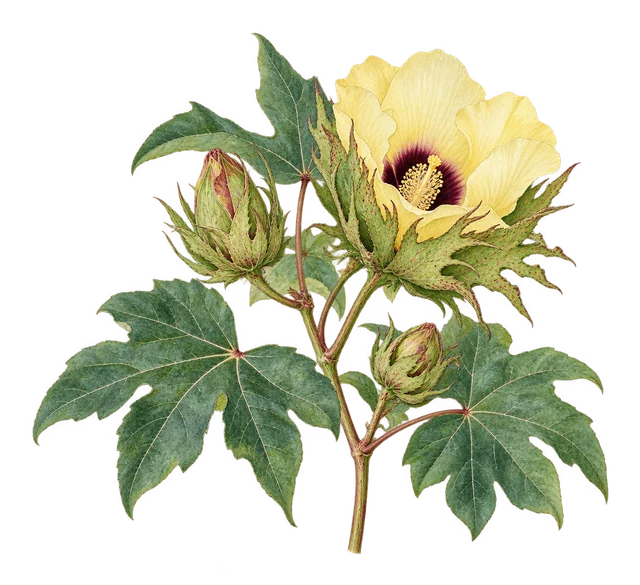
Cotton root bark
Gossypium barbadense L.
- Plant part / material
- Root bark
- Preparation studied or reported
- Historical medicinal root bark only; no preparation, dose or reproductive-use instructions. Whole-root reports are related risk context, not interchangeable evidence.
The Guianas source names Gossypium barbadense root bark. This is not cotton fibre, refined cottonseed oil, stem bark, a different Gossypium species or isolated gossypol.
Menstrual history
Traditional account
Reported or traditional useRoot bark is recorded for difficult or irregular menstruation. Historical reporting does not demonstrate an effective or safe treatment.
What the evidence supportsThe source is retained with its design and preparation limits; reported use is not upgraded to clinical effectiveness.
Do not use cotton root bark for fertility control, menstrual induction or pregnancy-related care. Avoid self-directed use in pregnancy, when trying to conceive or while breastfeeding; safety is not established. A food or textile use of another cotton material does not establish root-bark safety.
Other recorded root-bark use
Traditional account
Reported or traditional useThe same root account includes vomiting. This is documentation only, not a recommendation for treating nausea or pregnancy sickness.
What the evidence supportsThe source is retained with its design and preparation limits; reported use is not upgraded to clinical effectiveness.
Do not use cotton root bark for fertility control, menstrual induction or pregnancy-related care. Avoid self-directed use in pregnancy, when trying to conceive or while breastfeeding; safety is not established. A food or textile use of another cotton material does not establish root-bark safety.
Only the exact part and formulation described here; related existing cards do not inherit these claims.
- Do not use cotton root bark for fertility control, menstrual induction or pregnancy-related care.
- Avoid self-directed use in pregnancy, when trying to conceive or while breastfeeding; safety is not established.
- A food or textile use of another cotton material does not establish root-bark safety.
- DeFilipps, Maina and Crepin 2004: Medicinal Plants of the Guianas
- Sein 1986: Embryotoxic and immunodepressive effects of gossypol
- Kew Plants of the World Online: Gossypium barbadense
Read the complete historical reference and its material distinctions
Identity & detailed reference
Identity
The Guianas source names Gossypium barbadense root bark. This is not cotton fibre, refined cottonseed oil, stem bark, a different Gossypium species or isolated gossypol.
Ingredient details, preparation and research
Also known as: Gossypium barbadense root bark
Source plant or material
Gossypium barbadense L.; Root bark
Plant family / material: Malvaceae
Forms and route
Historical medicinal root bark only; no preparation, dose or reproductive-use instructions. Whole-root reports are related risk context, not interchangeable evidence.
Absorption and preparation
No absorption-enhancement directions are established for this material. An extract, food, infusion and isolated chemical can deliver different substances; study results do not establish a home preparation.
Traditional and reported uses
- Menstrual history: Root bark is recorded for difficult or irregular menstruation. Historical reporting does not demonstrate an effective or safe treatment.
- Other recorded root-bark use: The same root account includes vomiting. This is documentation only, not a recommendation for treating nausea or pregnancy sickness.
Contraindications and cautions
- Do not use cotton root bark for fertility control, menstrual induction or pregnancy-related care.
- Avoid self-directed use in pregnancy, when trying to conceive or while breastfeeding; safety is not established.
- A food or textile use of another cotton material does not establish root-bark safety.
Identity and exact material
The Guianas source names Gossypium barbadense root bark. This is not cotton fibre, refined cottonseed oil, stem bark, a different Gossypium species or isolated gossypol. Historical medicinal root bark only; no preparation, dose or reproductive-use instructions. Whole-root reports are related risk context, not interchangeable evidence.
Evidence and preparation boundaries
The compilation separates root bark from roots and from leaf or seed uses. Gossypol has experimental reproductive toxicity, but an isolated-compound mouse study is not proof of a safe root-bark dose or a predictable contraceptive effect. Neither the source history nor the toxicology establishes pregnancy, lactation or drug-interaction safety for a home product.
Safety and uncertainty
Do not use cotton root bark for fertility control, menstrual induction or pregnancy-related care. Avoid self-directed use in pregnancy, when trying to conceive or while breastfeeding; safety is not established. A food or textile use of another cotton material does not establish root-bark safety.
Evidence limits
- No exact root-bark morphology source was established in this review; do not create generic peeled bark presented as authenticated identification.
- The regional compilation is not an original clinical study and does not establish a safe preparation.
Entry sources
- DeFilipps, Maina and Crepin 2004: Medicinal Plants of the Guianas
- Sein 1986: Embryotoxic and immunodepressive effects of gossypol
- Kew Plants of the World Online: Gossypium barbadense
Reference entry 551 · Recorded content review: 2026-10-11 · Review scope and dates