


Key cautions
- Do not rely on this soup or a supplement to correct low milk supply without breastfeeding assessment.
- The recorded food tradition does not establish pregnancy or lactation safety of concentrated leaf extracts.
What’s inside
A reliable composition profile for the exact preparation was not established in this review; chemistry from another plant part is not transferred.
Uses in brief

- Ghanaian soup tradition (food or household practice).
- Thai vegetable use (food or household practice).
History, folklore and reported uses
History, folklore and traditional uses
The Ghana study records bra leaves within household food traditions. It collected people’s reports and beliefs, not a controlled measurement of milk output.
Traditional, historical and reported uses
- Ghanaian soup tradition
Food or household practiceWhy this label?
The source is retained with its design and preparation limits; reported use is not upgraded to clinical effectiveness.
Bra leaves occur in groundnut-based soup associated with milk supply. The documented preparation is food; the belief is not proof of a galactagogue effect.
- Thai vegetable use
Food or household practiceWhy this label?
The source is retained with its design and preparation limits; reported use is not upgraded to clinical effectiveness.
JIRCAS records young leaves as a cooked vegetable, with dipping sauces and in tom yam. These leaf uses are distinct from red-calyx drinks and colouring.
Includes only uses and context documented for this material. Historical reporting is not proof of benefit; no use-count quota is applied.
Women’s Health: traditions, evidence and cautions
Historical use does not establish benefit or safety. Pregnancy, breastfeeding and fertility care require particular caution: food, tea, essential oil and concentrated extract are not interchangeable. These records are not treatment, dosing or pregnancy-management instructions. Discuss supplements with a qualified clinician or pharmacist; do not delay evaluation of persistent symptoms.
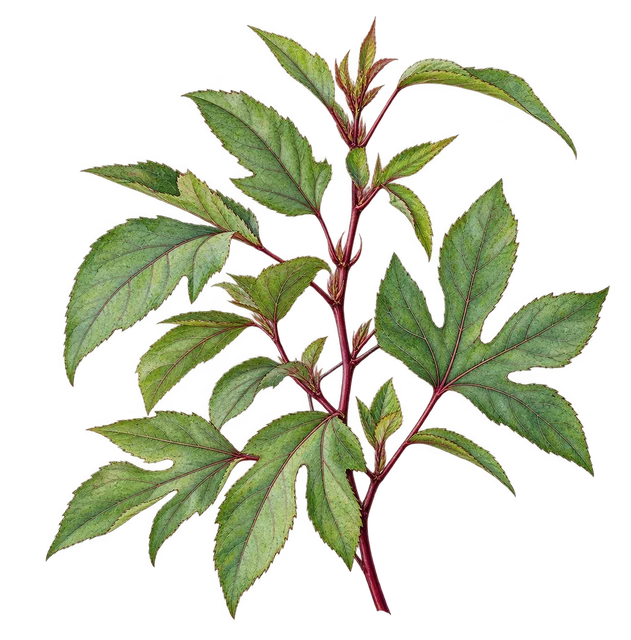
Roselle / bra leaf
Hibiscus sabdariffa L. as named by the Ghana survey
- Plant part / material
- Leaves
- Preparation studied or reported
- Culinary leaf vegetable, including the groundnut-based bra-leaf soup recorded in Ghana. No concentrated medicinal extract or calyx beverage is included.
The Ghana source calls this Hibiscus sabdariffa. Current POWO places that name under Sabdariffa gossypiifolia, while other institutional sources retain Hibiscus. This is a naming difference, not permission to substitute Chinese hibiscus or red calyces.
Ghanaian soup tradition
Food or household practice
Reported or traditional useBra leaves occur in groundnut-based soup associated with milk supply. The documented preparation is food; the belief is not proof of a galactagogue effect.
What the evidence supportsThe source is retained with its design and preparation limits; reported use is not upgraded to clinical effectiveness.
Do not rely on this soup or a supplement to correct low milk supply without breastfeeding assessment. The recorded food tradition does not establish pregnancy or lactation safety of concentrated leaf extracts. Groundnut-containing dishes are unsuitable for people with peanut allergy; leaf identity and other recipe ingredients also matter.
Thai vegetable use
Food or household practice
Reported or traditional useJIRCAS records young leaves as a cooked vegetable, with dipping sauces and in tom yam. These leaf uses are distinct from red-calyx drinks and colouring.
What the evidence supportsThe source is retained with its design and preparation limits; reported use is not upgraded to clinical effectiveness.
Do not rely on this soup or a supplement to correct low milk supply without breastfeeding assessment. The recorded food tradition does not establish pregnancy or lactation safety of concentrated leaf extracts. Groundnut-containing dishes are unsuitable for people with peanut allergy; leaf identity and other recipe ingredients also matter.
Only the exact part and formulation described here; related existing cards do not inherit these claims.
- Do not rely on this soup or a supplement to correct low milk supply without breastfeeding assessment.
- The recorded food tradition does not establish pregnancy or lactation safety of concentrated leaf extracts.
- Groundnut-containing dishes are unsuitable for people with peanut allergy; leaf identity and other recipe ingredients also matter.
- Ali et al. 2020: Special foods and local herbs used to enhance breastmilk production in Ghana
- JIRCAS Thai Local Vegetable Database: Hibiscus sabdariffa
- LactMed: Hibiscus
- Kew Plants of the World Online: Sabdariffa gossypiifolia, synonym Hibiscus sabdariffa
Read the complete historical reference and its material distinctions
Identity & detailed reference
Identity
The Ghana source calls this Hibiscus sabdariffa. Current POWO places that name under Sabdariffa gossypiifolia, while other institutional sources retain Hibiscus. This is a naming difference, not permission to substitute Chinese hibiscus or red calyces.
Ingredient details, preparation and research
Also known as: bra leaf; roselle leaf
Source plant or material
Hibiscus sabdariffa L. as named by the Ghana survey; Leaves
Plant family / material: Malvaceae
Forms and route
Culinary leaf vegetable, including the groundnut-based bra-leaf soup recorded in Ghana. No concentrated medicinal extract or calyx beverage is included.
Vitamins and minerals
A leaf vegetable contributes to a meal, but no values are assigned for Ghanaian soup: recipe, cooking losses and serving size are unspecified. Calyx-tea and fruit data are not leaf-food data.
Absorption and preparation
No absorption-enhancement directions are established for this material. An extract, food, infusion and isolated chemical can deliver different substances; study results do not establish a home preparation.
Traditional and reported uses
- Ghanaian soup tradition: Bra leaves occur in groundnut-based soup associated with milk supply. The documented preparation is food; the belief is not proof of a galactagogue effect.
- Thai vegetable use: JIRCAS records young leaves as a cooked vegetable, with dipping sauces and in tom yam. These leaf uses are distinct from red-calyx drinks and colouring.
Contraindications and cautions
- Do not rely on this soup or a supplement to correct low milk supply without breastfeeding assessment.
- The recorded food tradition does not establish pregnancy or lactation safety of concentrated leaf extracts.
- Groundnut-containing dishes are unsuitable for people with peanut allergy; leaf identity and other recipe ingredients also matter.
Identity and exact material
The Ghana source calls this Hibiscus sabdariffa. Current POWO places that name under Sabdariffa gossypiifolia, while other institutional sources retain Hibiscus. This is a naming difference, not permission to substitute Chinese hibiscus or red calyces. Culinary leaf vegetable, including the groundnut-based bra-leaf soup recorded in Ghana. No concentrated medicinal extract or calyx beverage is included.
Evidence and preparation boundaries
Food use can be described without labeling the vegetable a medicine. LactMed finds no valid clinical trials supporting hibiscus as a milk-supply treatment and lacks maternal/infant safety and milk-transfer data for medicinal use. Its flower-focused account cannot certify the safety of a leaf extract. No soup-specific nutrient calculation is justified without recipe and serving weights.
Safety and uncertainty
Do not rely on this soup or a supplement to correct low milk supply without breastfeeding assessment. The recorded food tradition does not establish pregnancy or lactation safety of concentrated leaf extracts. Groundnut-containing dishes are unsuitable for people with peanut allergy; leaf identity and other recipe ingredients also matter.
Evidence limits
- This is a focused source review, not a systematic clinical review. A traditional indication or laboratory result does not establish an effective or safe treatment.
- A lack of reported adverse effects is not proof of safety. No therapeutic dose or preparation is recommended.
Entry sources
- Ali et al. 2020: Special foods and local herbs used to enhance breastmilk production in Ghana
- JIRCAS Thai Local Vegetable Database: Hibiscus sabdariffa
- LactMed: Hibiscus
- Kew Plants of the World Online: Sabdariffa gossypiifolia, synonym Hibiscus sabdariffa
Reference entry 548 · Recorded content review: 2026-10-11 · Review scope and dates