


Key cautions
- Do not self-prescribe in pregnancy or breastfeeding: safety for these exact preparations is not established.
- Liver injury has been reported with a Corydalis-containing sleep product. Stop use and seek care for yellow eyes or skin, dark urine or unusual severe illness.
What’s inside
A reliable composition profile for the exact preparation was not established in this review; chemistry from another plant part is not transferred.
Uses in brief

- Menstrual and postpartum pain history (traditional account).
- Other pain traditions (traditional account).
History, folklore and reported uses
History, folklore and traditional uses
Chinese materia medica places this tuber within a traditional framework of blood and qi. These terms belong to that medical system and are not measurements of modern blood flow.
Traditional, historical and reported uses
- Menstrual and postpartum pain history
Traditional accountWhy this label?
The source is retained with its design and preparation limits; reported use is not upgraded to clinical effectiveness.
The university account records painful or absent menstruation and postpartum blood-stasis complaints. This documents a traditional indication, not a safe obstetric treatment.
- Other pain traditions
Traditional accountWhy this label?
The source is retained with its design and preparation limits; reported use is not upgraded to clinical effectiveness.
The same account lists chest, upper-abdominal and injury-related pain. Those descriptions are historical context; new chest pain needs medical assessment.
Includes only uses and context documented for this material. Historical reporting is not proof of benefit; no use-count quota is applied.
Story sources
Women’s Health: traditions, evidence and cautions
Historical use does not establish benefit or safety. Pregnancy, breastfeeding and fertility care require particular caution: food, tea, essential oil and concentrated extract are not interchangeable. These records are not treatment, dosing or pregnancy-management instructions. Discuss supplements with a qualified clinician or pharmacist; do not delay evaluation of persistent symptoms.
Corydalis / yan hu suo
Corydalis yanhusuo W.T.Wang ex Z.Y.Su & C.Y.Wu
- Plant part / material
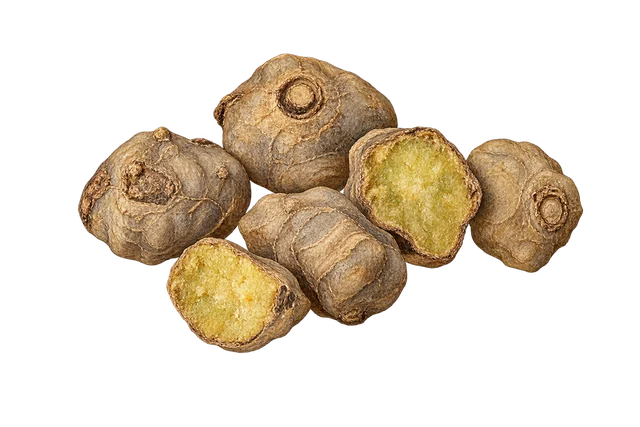
- Dried tuber (tuberous underground stem)
- Preparation studied or reported
- Authenticated tuber material; traditional processed pieces and compound preparations are separate from concentrated extracts. This record supplies no processing directions.
Only the exact part and formulation described here; related existing cards do not inherit these claims.
Chinese materia medica places this tuber within a traditional framework of blood and qi. These terms belong to that medical system and are not measurements of modern blood flow.
Menstrual and postpartum pain history
Traditional account
Reported or traditional useThe university account records painful or absent menstruation and postpartum blood-stasis complaints. This documents a traditional indication, not a safe obstetric treatment.
What the evidence supportsThe source is retained with its design and preparation limits; reported use is not upgraded to clinical effectiveness.
Do not self-prescribe in pregnancy or breastfeeding: safety for these exact preparations is not established. Liver injury has been reported with a Corydalis-containing sleep product. Stop use and seek care for yellow eyes or skin, dark urine or unusual severe illness. Drowsiness and dizziness are reported. Discuss use with a clinician if taking sedatives or if you have liver disease.
Other pain traditions
Traditional account
Reported or traditional useThe same account lists chest, upper-abdominal and injury-related pain. Those descriptions are historical context; new chest pain needs medical assessment.
What the evidence supportsThe source is retained with its design and preparation limits; reported use is not upgraded to clinical effectiveness.
Do not self-prescribe in pregnancy or breastfeeding: safety for these exact preparations is not established. Liver injury has been reported with a Corydalis-containing sleep product. Stop use and seek care for yellow eyes or skin, dark urine or unusual severe illness. Drowsiness and dizziness are reported. Discuss use with a clinician if taking sedatives or if you have liver disease.
Only the exact part and formulation described here; related existing cards do not inherit these claims.
- Do not self-prescribe in pregnancy or breastfeeding: safety for these exact preparations is not established.
- Liver injury has been reported with a Corydalis-containing sleep product. Stop use and seek care for yellow eyes or skin, dark urine or unusual severe illness.
- Drowsiness and dizziness are reported. Discuss use with a clinician if taking sedatives or if you have liver disease.
Read the complete historical reference and its material distinctions
Identity & detailed reference
Identity
Yanhusuo is the tuber drug of Corydalis yanhusuo, called Corydalis Rhizoma in materia medica. It is not a generic Corydalis root, another Corydalis species, or an isolated alkaloid.
Ingredient details, preparation and research
Also known as: yan hu suo; Corydalis Rhizoma
Source plant or material
Corydalis yanhusuo W.T.Wang ex Z.Y.Su & C.Y.Wu; Dried tuber (tuberous underground stem)
Plant family / material: Papaveraceae
Forms and route
Authenticated tuber material; traditional processed pieces and compound preparations are separate from concentrated extracts. This record supplies no processing directions.
Absorption and preparation
No absorption-enhancement directions are established for this material. An extract, food, infusion and isolated chemical can deliver different substances; study results do not establish a home preparation.
Traditional and reported uses
- Menstrual and postpartum pain history: The university account records painful or absent menstruation and postpartum blood-stasis complaints. This documents a traditional indication, not a safe obstetric treatment.
- Other pain traditions: The same account lists chest, upper-abdominal and injury-related pain. Those descriptions are historical context; new chest pain needs medical assessment.
Contraindications and cautions
- Do not self-prescribe in pregnancy or breastfeeding: safety for these exact preparations is not established.
- Liver injury has been reported with a Corydalis-containing sleep product. Stop use and seek care for yellow eyes or skin, dark urine or unusual severe illness.
- Drowsiness and dizziness are reported. Discuss use with a clinician if taking sedatives or if you have liver disease.
Identity and exact material
Yanhusuo is the tuber drug of Corydalis yanhusuo, called Corydalis Rhizoma in materia medica. It is not a generic Corydalis root, another Corydalis species, or an isolated alkaloid. Authenticated tuber material; traditional processed pieces and compound preparations are separate from concentrated extracts. This record supplies no processing directions.
Evidence and preparation boundaries
The cited human pain research involved Corydalis with Angelica dahurica; a combined result cannot establish what this tuber does alone. The source does not establish treatment of menstrual disease, infertility or a postpartum complication. A two-case liver report concerns a commercial sleep aid containing Corydalis, so it signals a product-related risk rather than proving a dose-response for authenticated tuber.
Safety and uncertainty
Do not self-prescribe in pregnancy or breastfeeding: safety for these exact preparations is not established. Liver injury has been reported with a Corydalis-containing sleep product. Stop use and seek care for yellow eyes or skin, dark urine or unusual severe illness. Drowsiness and dizziness are reported. Discuss use with a clinician if taking sedatives or if you have liver disease.
Evidence limits
- This is a focused source review, not a systematic clinical review. A traditional indication or laboratory result does not establish an effective or safe treatment.
- A lack of reported adverse effects is not proof of safety. No therapeutic dose or preparation is recommended.
- Corydalis authorship varies across current institutional displays; a 2026 nomenclatural correction adds (Y.H.Chou & Chun C.Hsu). The species identity and tuber scope are unchanged.
Entry sources
- Hong Kong Polytechnic University: Yangusuo
- Engman et al. 2023: Corydalis and Drug-Induced Liver Injury, two cases
- Kew Plants of the World Online: Corydalis yanhusuo
Reference entry 541 · Recorded content review: 2026-10-11 · Review scope and dates