


Key cautions
- The cited lactation evidence does not establish medicinal-use safety during pregnancy; postpartum traditions must not be extrapolated to pregnancy.
- Possible low blood sugar is especially important with diabetes medicines.
- Do not use unknown wild foliage or substitute another plant called rue.
What’s inside
Leaves and flowering tops contain guanidine derivatives, including galegine, which can lower blood glucose.
Uses in brief

- Traditional milk-supply use; reliable benefit and infant safety unestablished.
History, folklore and reported uses
History, folklore and traditional uses
LactMed records international galactagogue use. It does not supply a sufficiently specific origin to label this an exclusive regional practice.
Utah State describes goat’s rue as an invasive pasture/cropland weed and warns that it is toxic to livestock. This agricultural context is not a food or grazing recommendation.
Goat’s rue also belongs to the history of diabetes pharmacology. The American Diabetes Association describes older Galega use and the subsequent development of guanidine-related drugs. LactMed specifically identifies galegine in the leaves and flowering tops and warns about low blood glucose. A herb infusion is not metformin, and this history does not validate it as a diabetes treatment or a substitute for prescribed medicine.
Traditional, historical and reported uses
- Lactation / milk-supply tradition
Human researchWhy this label?
Older studies are poorly controlled. Combination-product results do not demonstrate goat’s-rue-only efficacy.
Used to stimulate milk production. Older studies are poorly controlled. Combination-product results do not demonstrate goat’s-rue-only efficacy.
Coverage reflects verified sources, without a minimum use quota.
Women’s Health: traditions, evidence and cautions
Historical use does not establish benefit or safety. Pregnancy, breastfeeding and fertility care require particular caution: food, tea, essential oil and concentrated extract are not interchangeable. These records are not treatment, dosing or pregnancy-management instructions. Discuss supplements with a qualified clinician or pharmacist; do not delay evaluation of persistent symptoms.
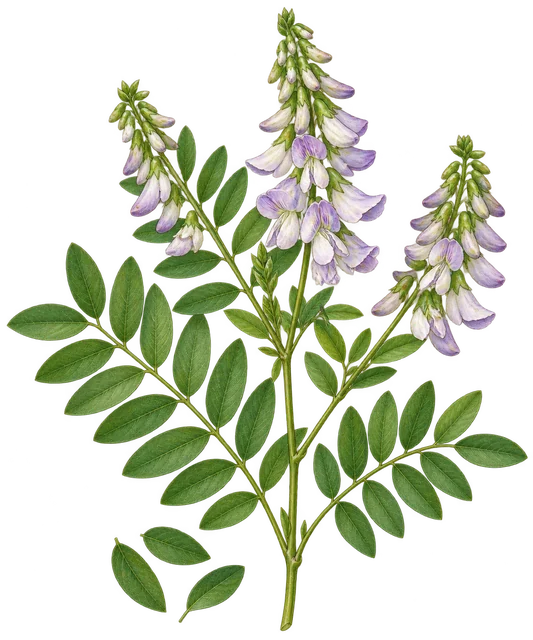
Goat’s rue
Galega officinalis L.
- Plant part / material
- Leaves and flowering tops
- Preparation studied or reported
- Herb infusion, supplements and combination products; not Ruta rue.
Galega officinalis L.; Leaves and flowering tops.
Goat’s rue also belongs to the history of diabetes pharmacology. The American Diabetes Association describes older Galega use and the subsequent development of guanidine-related drugs. LactMed specifically identifies galegine in the leaves and flowering tops and warns about low blood glucose. A herb infusion is not metformin, and this history does not validate it as a diabetes treatment or a substitute for prescribed medicine.
Lactation / milk-supply tradition
Insufficient reliable human evidence
Reported or traditional useUsed to stimulate milk production.
What the evidence supportsOlder studies are poorly controlled. Combination-product results do not demonstrate goat’s-rue-only efficacy.
Galegine can lower blood glucose, particularly concerning with diabetes medicines. Nursing-infant safety is poorly characterized. Liver events occurred with herb combinations and do not prove a single cause.
One exact-material card. Herb infusion, supplements and combination products; not Ruta rue.. Keep preparations distinct; do not transfer findings from a named extract to every tea or powder.
- The cited lactation evidence does not establish medicinal-use safety during pregnancy; postpartum traditions must not be extrapolated to pregnancy.
- Possible low blood sugar is especially important with diabetes medicines.
- Do not use unknown wild foliage or substitute another plant called rue.
Read the complete historical reference and its material distinctions
Identity & detailed reference
Identity
Galega officinalis L.; Leaves and flowering tops.
Ingredient details, preparation and research
Also known as: Galega officinalis; goatsrue
Source plant or material
Galega officinalis L. — Leaves and flowering tops
Plant family / material: Fabaceae (pea family)
Forms and route
Herb infusion, supplements and combination products; not Ruta rue.
Vitamins and minerals
No nutrient quantities or daily-value claims are assigned to this medicinal material. Do not borrow the food nutrient profile of another plant part or use an extract as a dietary substitute.
Absorption and preparation
Preparation and route matter. A tea, whole powder, alcohol extract and isolated constituent can give different exposures. No food pairing or absorption-enhancement technique is established by the sources reviewed.
Traditional and reported uses
- Used to stimulate milk production. Older studies are poorly controlled. Combination-product results do not demonstrate goat’s-rue-only efficacy.
Contraindications and cautions
- The cited lactation evidence does not establish medicinal-use safety during pregnancy; postpartum traditions must not be extrapolated to pregnancy.
- Possible low blood sugar is especially important with diabetes medicines.
- Do not use unknown wild foliage or substitute another plant called rue.
- Do not delay skilled breastfeeding assessment for poor milk transfer or infant growth.
Similar items and how they compare
- Common rue
Shared common-name fragment
Ruta species are different plants; this card is Galega officinalis.
- Metformin
Related history of glucose-lowering research
A regulated medicine is not equivalent to an unstandardized herb; no substitution is proposed.
Identity and composition
Galega officinalis L.; Leaves and flowering tops. Leaves and flowering tops contain guanidine derivatives, including galegine, which can lower blood glucose.
Lactation / milk-supply tradition: what evidence can say
Older studies are poorly controlled. Combination-product results do not demonstrate goat’s-rue-only efficacy. Galegine can lower blood glucose, particularly concerning with diabetes medicines. Nursing-infant safety is poorly characterized. Liver events occurred with herb combinations and do not prove a single cause.
Exact material and preparation boundaries
One exact-material card. Herb infusion, supplements and combination products; not Ruta rue.. Keep preparations distinct; do not transfer findings from a named extract to every tea or powder.
Medicines, pregnancy and breastfeeding
LactMed’s August 2026 revision warns about possible hypoglycaemia, especially with antidiabetic drugs. Nursing-mother and infant safety data are sparse. Liver and newborn events involving several herbs cannot reliably identify goat’s rue as the cause. Pregnancy safety is not established by a postpartum-use tradition.
Source-supported safety summary
The cited lactation evidence does not establish medicinal-use safety during pregnancy; postpartum traditions must not be extrapolated to pregnancy. Possible low blood sugar is especially important with diabetes medicines. Do not use unknown wild foliage or substitute another plant called rue. Do not delay skilled breastfeeding assessment for poor milk transfer or infant growth.
Evidence limits
- This is a focused educational source review, not a systematic review or a treatment plan.
- Traditional use documents a practice; it does not establish clinical benefit. Laboratory findings and multi-ingredient trials cannot establish a single ingredient’s effects.
- No food, craft or additional therapeutic use is added solely to fill a use quota.
Entry sources
- LactMed: Goat’s Rue
- Utah State University: Goatsrue identification and management
- American Diabetes Association: Diabetes Research and Care Through the Ages
Reference entry 529 · Recorded content review: 2026-10-11 · Review scope and dates