


Key cautions
- Nut allergy and cross-contact are practical concerns; check the actual product.
- Do not infer that all Canarium species, resins or extracted oils are edible.
What’s inside
Kernels contain oil, protein and carbohydrate with tree-to-tree and species variation. Nut oil or resin chemistry is not identical to whole-kernel composition.
Uses in brief

- Kernel food
- Paste and mixed food ingredient
History, folklore and reported uses
History, folklore and traditional uses
ACIAR research connects galip development in Papua New Guinea with wider Melanesian Canarium food systems. The ethnobotanical inventory explicitly names C. harveyi as nangai in Vanuatu, correcting the tendency to equate every regional nut name with C. indicum.
Traditional, historical and reported uses
- Kernel food
Food or household practiceWhy this label?
Sources document this named food or material use; no therapeutic outcome is claimed.
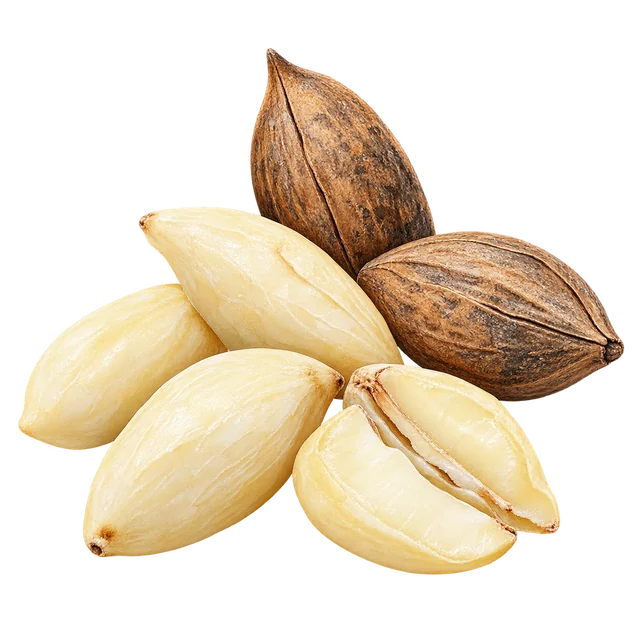
Canarium kernels are established village and market foods in Melanesia. The species should remain explicit when possible because several locally important nuts share common names.
- Paste and mixed food ingredient
Food or household practiceWhy this label?
Sources document this named food or material use; no therapeutic outcome is claimed.
The PNG project records kernels made into paste and combined with foods such as taro or banana. This is a culinary preparation, not evidence for isolated nut-oil treatment claims.
2 narrowly supported uses; no clinical efficacy or universal preparation is inferred.
Historical-use additions reviewed 2026-10-09
Regional reading paths
These sourced notes describe cultivation, trade, food traditions or material history. A regional connection does not claim exclusive origin.
Australia & Oceania
native/cultivated; Papua New Guinea, Solomon Islands and Vanuatu
Edible nut and ingredient.
Identity & detailed reference
Identity
Canarium indicum edible kernels are the main anchor; regional ngali/nangai names can also include Canarium harveyi and should never be treated as an exact one-species synonym.
Ingredient details, preparation and research
Source plant or material
Canarium indicum edible kernels are the main anchor; regional ngali/nangai names can also include Canarium harveyi and should never be treated as an exact one-species synonym.
Plant family / material: Burseraceae
Forms and route
Authenticated edible kernels, processed nuts and nut ingredients.
Vitamins and minerals
No shared nutrient panel is assigned across C. indicum and C. harveyi or all local varieties. Salted, roasted and mixed products require their own labels.
Absorption and preparation
Grinding and cooking change the food matrix; no disease-treatment or special absorption claim follows from the kernel’s fat content.
Practical preparation
Use properly processed commercial or established local food supply. Check species and allergens where known, and store the oil-rich kernels as directed to limit deterioration.
Traditional and reported uses
- Canarium kernels are established village and market foods in Melanesia. The species should remain explicit when possible because several locally important nuts share common names.
- The PNG project records kernels made into paste and combined with foods such as taro or banana. This is a culinary preparation, not evidence for isolated nut-oil treatment claims.
Contraindications and cautions
- Nut allergy and cross-contact are practical concerns; check the actual product.
- Do not infer that all Canarium species, resins or extracted oils are edible.
Food diversity within the name
C. harveyi and C. indicum have separate botanical descriptions and regional cultivation histories. A catalog can group their common-name relationship while refusing to copy a measured constituent profile between species.
Processing and livelihoods
The development project studied processing and markets, not a human medicinal trial. Better product handling and traceability are relevant outcomes without attributing anti-inflammatory or immune benefits to a snack serving.
Evidence limits
This is a food/material reference, not evidence of disease treatment. Geographic and customary-use records do not establish a medicinal dose. Nutrient quantities are omitted unless a matching food form and serving have been verified.
Entry sources
- ACIAR: Canarium nut industry
- ACIAR: Domestication and commercialisation of Canarium indicum in PNG
- ACIAR: Ethnobotanical inventory, Canarium harveyi and indicum
Reference entry 510 · Recorded content review: 2026-10-09 · Review scope and dates