


Key cautions
- Use the named food species and an established cooked preparation.
- Do not transfer leaf, latex or medicinal-extract uses to the edible seed.
What’s inside
Starchy seed and immature-fruit tissues contain ordinary food macronutrients; no precise composition is assigned across maturities or cooking methods.
Uses in brief

- Cooked seeds
- Immature-fruit vegetable
History, folklore and reported uses
History, folklore and traditional uses
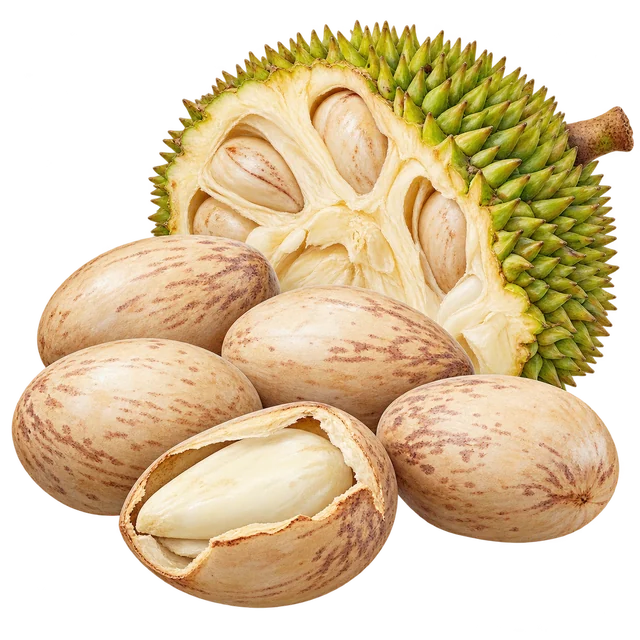
NTBG locates breadnut’s native range in New Guinea, with cultivation in home gardens. It notes that the species is relatively uncommon elsewhere in Oceania compared with cultivated breadfruit, a distinction worth retaining in a regional list.
Traditional, historical and reported uses
- Cooked seeds
Food or household practiceWhy this label?
Sources document this named food or material use; no therapeutic outcome is claimed.
NTBG records boiled or roasted seeds with a chestnut-like texture. This is the main seed-food distinction from seedless breadfruit.
- Immature-fruit vegetable
Food or household practiceWhy this label?
Sources document this named food or material use; no therapeutic outcome is claimed.
The same botanical account records immature fruit and seeds in soups, stews and other cooked dishes. Mature seeded fruit and seedless breadfruit should not silently share recipe assumptions.
2 narrowly supported uses; no clinical efficacy or universal preparation is inferred.
Historical-use additions reviewed 2026-10-09
Regional reading paths
These sourced notes describe cultivation, trade, food traditions or material history. A regional connection does not claim exclusive origin.
Australia & Oceania
native/cultivated; New Guinea
Cooked starchy seeds.
Identity & detailed reference
Identity
Artocarpus camansi; breadnut, a distinct species in the breadfruit complex, emphasizing its edible seeds rather than seedless breadfruit pulp.
Ingredient details, preparation and research
Source plant or material
Artocarpus camansi; breadnut, a distinct species in the breadfruit complex, emphasizing its edible seeds rather than seedless breadfruit pulp.
Plant family / material: Moraceae
Forms and route
Properly prepared seeds and immature fruit in established food dishes.
Vitamins and minerals
Do not copy values for seedless Artocarpus altilis pulp to the seeds of A. camansi. The edible portion and preparation must match.
Absorption and preparation
Cooking changes the texture and availability of starch, but no medicinal absorption or disease-treatment advantage is established here.
Practical preparation
Use authenticated food produce and a trusted preparation for breadnut. The record of cooked use is not a guide to selecting unknown Artocarpus species or eating unprocessed plant parts.
Traditional and reported uses
- NTBG records boiled or roasted seeds with a chestnut-like texture. This is the main seed-food distinction from seedless breadfruit.
- The same botanical account records immature fruit and seeds in soups, stews and other cooked dishes. Mature seeded fruit and seedless breadfruit should not silently share recipe assumptions.
Contraindications and cautions
- Use the named food species and an established cooked preparation.
- Do not transfer leaf, latex or medicinal-extract uses to the edible seed.
Three-species complex
NTBG distinguishes A. altilis, A. camansi and A. mariannensis and their distribution histories. A label saying only breadfruit can conceal a different species and edible portion, so this card retains the breadnut identity.
Food and agroforestry context
The NTBG database documents breadnut in New Guinea forests, home gardens and mixed agroforestry. It describes gathered seeds in village markets and their contribution to local livelihoods. This economic and botanical evidence supports regional importance without implying a therapeutic effect.
Evidence limits
Specialist botanical and extension sources support the narrowly bounded food identity. Species-account food information is not a controlled human nutrition study or an all-parts edibility statement.
Entry sources
- National Tropical Botanical Garden: Breadfruit species
- University of Hawaiʻi CTAHR: Pacific Crops
- NTBG Tropical Plant Database: Artocarpus camansi
Reference entry 497 · Recorded content review: 2026-10-09 · Review scope and dates