


Key cautions
- People with prescribed sodium or mineral restrictions should not treat saltbush as automatically suitable.
- Do not harvest from contaminated ground or assume all saltbush species share this food use.
What’s inside
Leaf minerals contribute salty taste; plant composition is influenced by growing conditions. The leaf is not simply sodium chloride.
Uses in brief

- Leafy vegetable
- Dried herb seasoning
History, folklore and reported uses
History, folklore and traditional uses
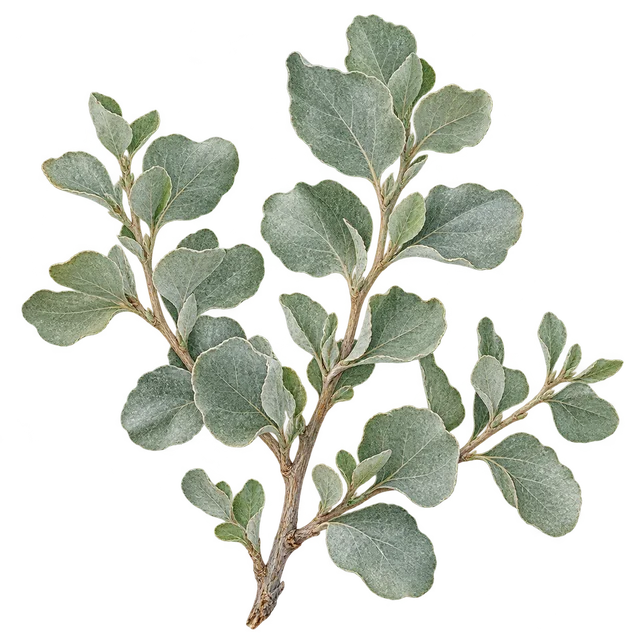
Old man saltbush is an Australian native used in contemporary native-food cookery. The South Australian Native Foods Association separately records historical seed use and current use of leaves and flower sprays; those parts should not be conflated.
Traditional, historical and reported uses
- Leafy vegetable
Food or household practiceWhy this label?
Sources document this named food or material use; no therapeutic outcome is claimed.
SANFA describes leaves prepared as a vegetable or as food wrapping and stuffing ingredients. These are culinary functions, not medicinal applications.
- Dried herb seasoning
Food or household practiceWhy this label?
Sources document this named food or material use; no therapeutic outcome is claimed.
Dried leaves can provide a salty, herby finish to food. The amount of sodium or other minerals must be checked rather than inferred from flavour alone.
2 narrowly supported uses; no clinical efficacy or universal preparation is inferred.
Historical-use additions reviewed 2026-10-09
Regional reading paths
These sourced notes describe cultivation, trade, food traditions or material history. A regional connection does not claim exclusive origin.
Australia & Oceania
native; Australia
Salty culinary leaves.
Identity & detailed reference
Identity
Atriplex nummularia; old man saltbush culinary leaves, not the uncertain biblical mallows/saltbush identification.
Ingredient details, preparation and research
Source plant or material
Atriplex nummularia; old man saltbush culinary leaves, not the uncertain biblical mallows/saltbush identification.
Plant family / material: Amaranthaceae
Forms and route
Fresh food leaves, prepared leafy vegetable and dried leaf seasoning.
Vitamins and minerals
No sodium-replacement or low-sodium claim is assigned without analyzing the actual food. A mineral-rich reputation does not establish an appropriate dietary dose.
Absorption and preparation
A salty flavour does not reveal mineral bioavailability. No human absorption advantage is established for these leaves over other foods.
Practical preparation
Use authenticated food-grown leaves. Follow established culinary preparation; a dried herb can season a dish but should not be assumed to provide a measured equivalent to table salt.
Traditional and reported uses
- SANFA describes leaves prepared as a vegetable or as food wrapping and stuffing ingredients. These are culinary functions, not medicinal applications.
- Dried leaves can provide a salty, herby finish to food. The amount of sodium or other minerals must be checked rather than inferred from flavour alone.
Contraindications and cautions
- People with prescribed sodium or mineral restrictions should not treat saltbush as automatically suitable.
- Do not harvest from contaminated ground or assume all saltbush species share this food use.
A specific Australian species
NSW National Parks identifies A. nummularia as old man saltbush in Australian arid and semi-arid habitats. This botanical record anchors the species and regional connection; it does not establish food safety for every plant called saltbush.
Do not transfer historical wound claims
The NSW food account includes older non-food uses. This card intentionally restricts practical recommendations to food leaves; raw salty plant material is not a sterile wound product.
Evidence limits
This is a food/material reference, not evidence of disease treatment. Geographic and customary-use records do not establish a medicinal dose. Nutrient quantities are omitted unless a matching food form and serving have been verified.
Entry sources
- South Australian Native Foods Association: Old Man Saltbush
- NSW National Parks: Bush tucker on the menu
- NSW National Parks: Saltbush
Reference entry 490 · Recorded content review: 2026-10-09 · Review scope and dates