


Key cautions
- Do not identify edible Solanum fruits by a shared color or common name; many unrelated or related plants are unsuitable foods.
What’s inside
Organic acids, carotenoids and phenolic compounds have been characterized in the fruit.
Uses in brief

- Fruit drinks
- Charapita sauce
History, folklore and reported uses
History, folklore and traditional uses
INIA lists cocona among Peru’s native crops, and regional food reporting locates its sauce and beverage uses in the Amazonian east. Neither source establishes one uniform recipe across Amazonian communities.
Traditional, historical and reported uses
- Fruit drinks
Food or household practiceWhy this label?
Source documents this specific material, culinary use or attributed practice; no clinical efficacy is inferred.
Peru’s health ministry records cocona used in juices and salads. This supports an ordinary food role while the drink’s sugar content depends on its preparation.
- Charapita sauce
Food or household practiceWhy this label?
Source documents this specific material, culinary use or attributed practice; no clinical efficacy is inferred.
The same regional account describes a spicy cocona sauce with ají charapita. It is a distinct savory use with its own pepper-related irritation and ingredient considerations.
2 bounded uses; regional records do not establish treatment effects.
Historical-use additions reviewed 2026-10-09
Regional reading paths
These sourced notes describe cultivation, trade, food traditions or material history. A regional connection does not claim exclusive origin.
South America
native and cultivated; Peru, Amazon region
Fruit for juices and sauces.
Identity & detailed reference
Identity
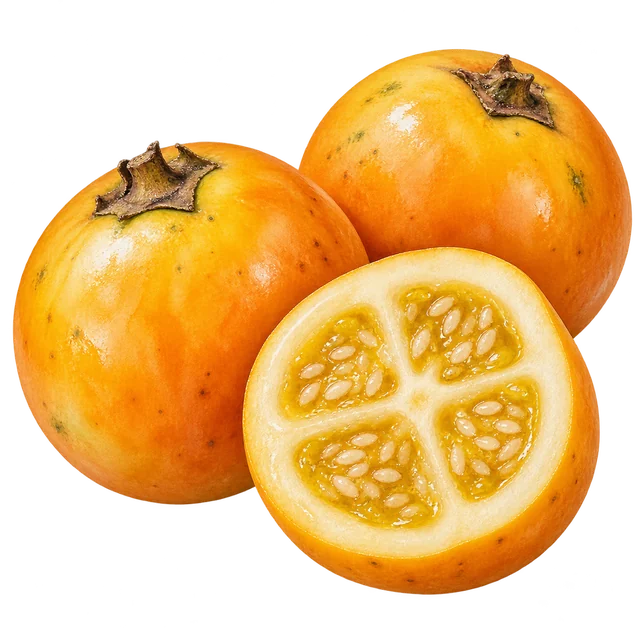
Solanum sessiliflorum; the edible fruit of Solanum sessiliflorum, cocona or cubiu; not other wild Solanum berries.
Ingredient details, preparation and research
Also known as: Solanum sessiliflorum
Source plant or material
Solanum sessiliflorum
Plant family / material: Solanaceae
Forms and route
Fresh culinary fruit, pulp, juices and prepared sauces.
Vitamins and minerals
Sweetened juice and hot sauce differ from unmixed pulp. No serving-specific nutrient amount or cholesterol-lowering effect is inferred from the fruit’s chemistry.
Absorption and preparation
Scavenging of reactive molecules in laboratory assays is not a measurement of absorption or proof of a clinical antioxidant effect.
Practical preparation
Select identified food-grade fruit, wash before cutting and follow a reliable culinary preparation. Keep cut fruit, juice and fresh sauces refrigerated.
Traditional and reported uses
- Fruit drinks
- Charapita sauce
Contraindications and cautions
- Do not identify edible Solanum fruits by a shared color or common name; many unrelated or related plants are unsuitable foods.
- Medicinal claims appearing in promotional accounts are not adopted here. Fruit is not a substitute for lipid, blood-pressure or diabetes treatment.
Chemistry rather than clinical proof
A primary study identifies carotenoids and phenolics with chromatography and examines reactive-species scavenging. Those methods characterize a sample; they do not show that eating cocona cures disease.
Evidence limits
This is a food-form review, not a treatment recommendation. Composition and laboratory findings apply to the material actually studied; no medicinal dose, universal nutrient ranking or preservation guarantee is inferred.
Entry sources
- INIA: Los cultivos nativos en las comunidades del Perú
- MINSA Peru: Cocona food uses
- Carotenoids and phenolics of Solanum sessiliflorum fruit
Reference entry 464 · Recorded content review: 2026-10-09 · Review scope and dates