


Key cautions
- Do not transfer seed or peel extract claims to eating the pulp.
- Sweetened desserts and nectars may contain substantial added sugar and dairy or other allergens.
What’s inside
Organic acids, carbohydrate and phenolic compounds; studies examine vitamin C and flavonoids in separately analyzed pulp and seeds.
Uses in brief

- Fruit drinks
- Creams and frozen desserts
History, folklore and reported uses
History, folklore and traditional uses
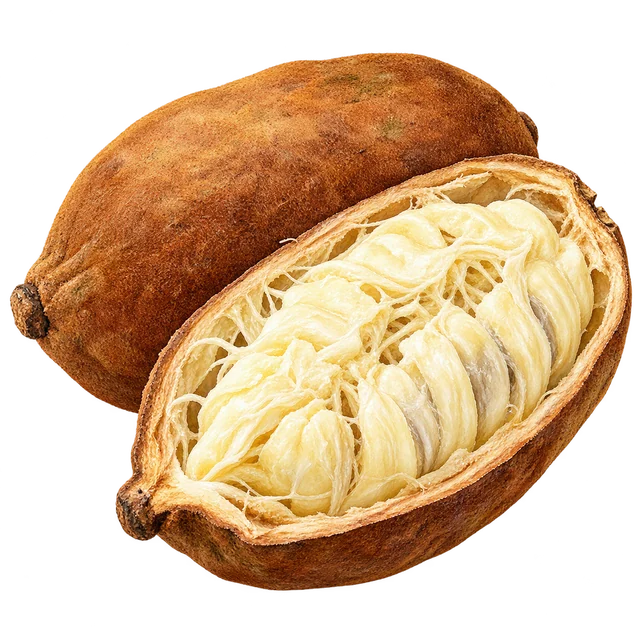
Cupuaçu belongs to Amazonian fruit-food traditions, with Brazilian agricultural research documenting its production and processing. Its relationship to cacao does not make the sour pulp interchangeable with cocoa powder or chocolate.
Traditional, historical and reported uses
- Fruit drinks
Food or household practiceWhy this label?
Source documents this specific material, culinary use or attributed practice; no clinical efficacy is inferred.
Embrapa records cupuaçu pulp in juices and other beverages. The finished drink’s dilution and sweetening affect both taste and composition.
- Creams and frozen desserts
Food or household practiceWhy this label?
Source documents this specific material, culinary use or attributed practice; no clinical efficacy is inferred.
Embrapa also documents creams, sweets and ice cream made from the aromatic pulp. These are distinct culinary preparations, not ways of administering an extract.
2 bounded uses; regional records do not establish treatment effects.
Historical-use additions reviewed 2026-10-09
Regional reading paths
These sourced notes describe cultivation, trade, food traditions or material history. A regional connection does not claim exclusive origin.
South America
native; Brazil, Amazon region
Fruit pulp for processed foods.
Identity & detailed reference
Identity
Theobroma grandiflorum; the aromatic edible fruit pulp of Theobroma grandiflorum; seeds, seed butter and cupulate are separate products.
Ingredient details, preparation and research
Also known as: Theobroma grandiflorum
Source plant or material
Theobroma grandiflorum
Plant family / material: Malvaceae
Forms and route
Freshly separated or frozen food-grade pulp, drinks, creams, preserves and frozen desserts.
Vitamins and minerals
Pulp, seed butter, sugar-sweetened nectar and ice cream have different nutrient profiles. No antioxidant potency ranking or fixed vitamin serving is assigned.
Absorption and preparation
An assay on extracted compounds is not a measurement of absorption from a dessert. Adding fat or sugar does not create a proven medicinal pairing.
Practical preparation
Choose hygienically processed pulp, thaw as directed and keep prepared foods refrigerated. Remove seeds when preparing pulp; do not grind them into this fruit-food preparation.
Traditional and reported uses
- Fruit drinks
- Creams and frozen desserts
Contraindications and cautions
- Do not transfer seed or peel extract claims to eating the pulp.
- Sweetened desserts and nectars may contain substantial added sugar and dairy or other allergens.
Different fruit fractions
A primary study analyzed flavonoids, proanthocyanidins and vitamin C in pulp and seeds, while another used solvent extracts. Those material differences prevent transferring a laboratory result across all cupuaçu products.
Evidence limits
This is a food-form review, not a treatment recommendation. Composition and laboratory findings apply to the material actually studied; no medicinal dose, universal nutrient ranking or preservation guarantee is inferred.
Entry sources
- Embrapa: Estudos físicos e químicos de bacuri, cupuaçu e muruci
- Embrapa: Cupuaçu cultivation and products
- Flavonoids, proanthocyanidins and vitamin C in cupuaçu pulp and seeds
- Solvent-extract assays of aguaje and cupuaçu pulps
Reference entry 457 · Recorded content review: 2026-10-09 · Review scope and dates