


Key cautions
- Contaminated açaí beverages have been linked to oral Chagas transmission
- Check added sugars and other ingredients, especially when the product is a dessert blend rather than plain pulp.
What’s inside
Fruit lipids, fiber and pigments including anthocyanins; sugar content of a finished bowl depends heavily on added ingredients.
Uses in brief

- Regional pulp food
- Pulp beverages
History, folklore and reported uses
History, folklore and traditional uses
Regional context: native and harvested/cultivated; northern Brazil. These examples describe specific food or material traditions and production settings; they do not establish exclusive ownership, a single continent-wide recipe, or therapeutic effectiveness.
Traditional, historical and reported uses
- Regional pulp food
Food or household practiceWhy this label?
Source documents this specific material, culinary use or attributed practice; no clinical efficacy is inferred.
Embrapa identifies açaí as a food and livelihood source for riverine communities in northern Brazil. This record concerns the fruit supply chain rather than a cure.
- Pulp beverages
Food or household practiceWhy this label?
Source documents this specific material, culinary use or attributed practice; no clinical efficacy is inferred.
An outbreak investigation and later laboratory detection work both examine açaí beverages or pulp. They reinforce the need for controlled food processing when using the fruit in drinks.
2 bounded uses; regional records do not establish treatment effects.
Historical-use additions reviewed 2026-10-09
Regional reading paths
These sourced notes describe cultivation, trade, food traditions or material history. A regional connection does not claim exclusive origin.
South America
native and harvested/cultivated; northern Brazil
Processed fruit pulp beverage or food.
Identity & detailed reference
Identity
Euterpe oleracea; processed edible fruit pulp of Euterpe oleracea; E. precatoria is another açaí species and should be identified separately on a product.
Ingredient details, preparation and research
Also known as: Euterpe oleracea
Source plant or material
Euterpe oleracea
Plant family / material: Arecaceae
Forms and route
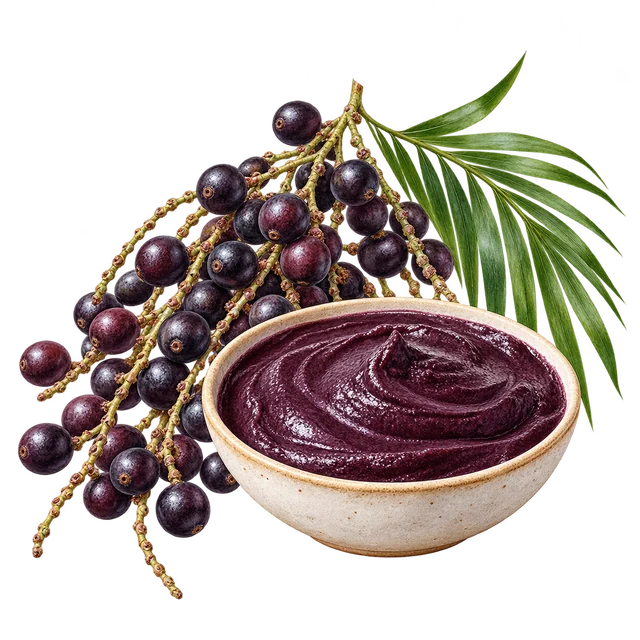
Hygienically processed pulp, frozen pulp and prepared beverages or bowls; sweetened blends and powders differ.
Vitamins and minerals
A frozen sweetened blend is not equivalent to unsweetened pulp. No universal vitamin, mineral or energy value is assigned to the name açaí.
Absorption and preparation
Pigment content and laboratory assays do not prove a special absorption advantage, cleansing effect or disease-prevention benefit.
Practical preparation
Choose traceable commercially processed pulp with appropriate safety controls. Keep frozen or refrigerated as labeled and do not rely on freezing alone to make an unsafe raw product safe.
Traditional and reported uses
- Regional pulp food
- Pulp beverages
Contraindications and cautions
- Contaminated açaí beverages have been linked to oral Chagas transmission. Avoid unverified raw pulp and follow local food-safety advice.
- Check added sugars and other ingredients, especially when the product is a dessert blend rather than plain pulp.
A specific contamination hazard
Research identified orally transmitted Trypanosoma cruzi infection associated with suspect açaí juice and developed detection methods for pulp. It does not imply that every commercial product is contaminated, or that visual inspection can certify safety.
Evidence limits
This is a food-form review, not a treatment recommendation. Composition and laboratory findings apply to the material actually studied; no medicinal dose, universal nutrient ranking or preservation guarantee is inferred.
Entry sources
- Embrapa: Uso sustentável de açaí, andiroba e castanha
- Oral transmission of Trypanosoma cruzi in the Brazilian Amazon
- Validation of Trypanosoma cruzi detection in açaí pulp
Reference entry 456 · Recorded content review: 2026-10-09 · Review scope and dates