


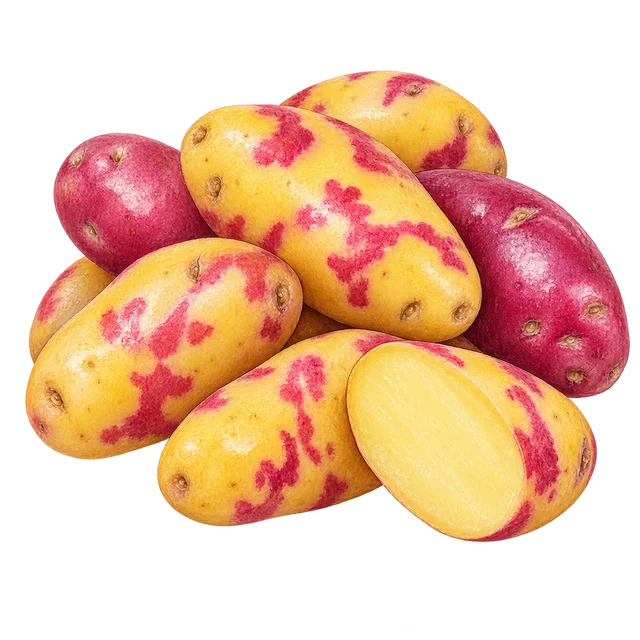
Key cautions
- This description is not a foraging guide or permission to eat similarly colored wild tubers.
- Whole cooked tuber and isolated research extracts are different materials.
What’s inside
Water, carbohydrate and cultivar-dependent betalain pigments, including yellow and red pigment classes.
Uses in brief

- Cooked Andean tuber
- Pigment-related food research
History, folklore and reported uses
History, folklore and traditional uses
Ulluco is one of the native tubers maintained by Andean farmers, including communities in Peru and Bolivia. Its local names, cultivars and dishes should be retained rather than flattened into a generic root-vegetable category.
Traditional, historical and reported uses
- Cooked Andean tuber
Food or household practiceWhy this label?
Source documents this specific material, culinary use or attributed practice; no clinical efficacy is inferred.
The FAO/ANPE crop guide records olluco in regional food systems. Its value is as a food ingredient with its own texture, rather than as a renamed potato.
- Pigment-related food research
Laboratory/animal researchWhy this label?
This use entry describes a laboratory, pilot-scale or nonhuman experiment; it does not establish an ordinary household practice, clinical benefit or safe home protocol.
Primary studies isolate and characterize betalains from ulluco. This is potential ingredient research; it does not authorize household solvent extraction or establish approval as a commercial color additive.
2 bounded uses; regional records do not establish treatment effects.
Historical-use additions reviewed 2026-10-09
Regional reading paths
These sourced notes describe cultivation, trade, food traditions or material history. A regional connection does not claim exclusive origin.
South America
native and cultivated; Peru, Bolivia
Cooked tubers.
Identity & detailed reference
Identity
Ullucus tuberosus; the edible stem tuber of Ullucus tuberosus; leaves and concentrated pigment extracts are outside this tuber-food scope.
Ingredient details, preparation and research
Also known as: Ullucus tuberosus
Source plant or material
Ullucus tuberosus
Plant family / material: Basellaceae
Forms and route
Fresh culinary tubers and cooked preparations, with cultivars differing in color and shape.
Vitamins and minerals
Bright color does not establish a vitamin concentration. Composition of an isolated pigment fraction cannot be substituted for a cooked-tuber serving.
Absorption and preparation
Laboratory antioxidant capacity measures a reaction under test conditions, not antioxidant effects or nutrient absorption in the person eating the food.
Practical preparation
Purchase identified culinary tubers, clean with safe water and cook using a reliable recipe. Keep cooked dishes refrigerated and avoid prolonged warm storage.
Traditional and reported uses
- Cooked Andean tuber
- Pigment-related food research
Contraindications and cautions
- This description is not a foraging guide or permission to eat similarly colored wild tubers.
- Whole cooked tuber and isolated research extracts are different materials.
Different colors, different profiles
Investigations of red and yellow varieties and separated pigment fractions identify multiple betalains. Those findings describe sampled materials and should not become universal potency or health claims.
Evidence limits
This is a food-form review, not a treatment recommendation. Composition and laboratory findings apply to the material actually studied; no medicinal dose, universal nutrient ranking or preservation guarantee is inferred.
Entry sources
- FAO and ANPE: Guía de campo de los cultivos andinos
- Betalains in red and yellow ulluco
- Betalain fractions from Ullucus tuberosus
Reference entry 450 · Recorded content review: 2026-10-09 · Review scope and dates