


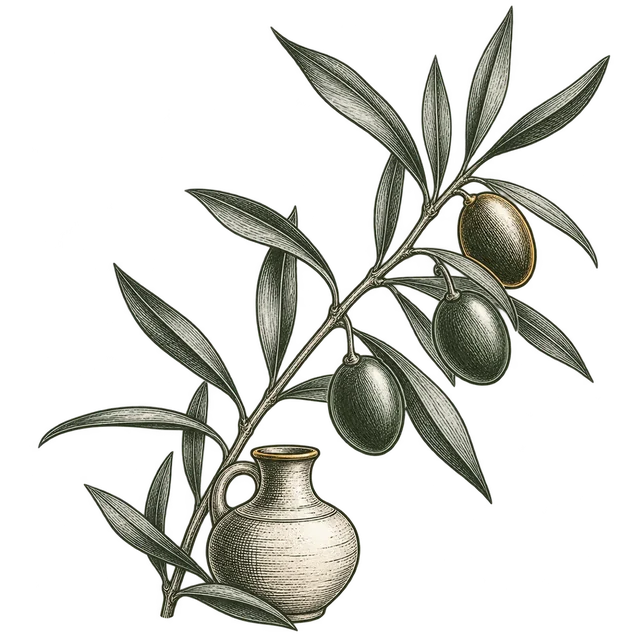
Key cautions
- Check for pits or pit fragments, even in pitted olives, and choose pieces appropriate to the eater’s chewing ability.
- Cured olives can be salty. Use the label for the exact product, especially when following a sodium restriction.
What’s inside
The flesh supplies fat rich in monounsaturated fatty acids, water and some fiber, with variable phenolic compounds. Oleuropein contributes bitterness in untreated fruit; curing changes it. Sodium depends heavily on processing, and color alone does not reveal the method or nutrient profile.
Uses in brief

- Use a small portion of cured table olives as a savory ingredient or accompaniment.
- Treat whole olives and extracted olive oil as separate foods with different servings.
In the King James Bible
In the King James Bible
Named material
The Bible describes olive harvesting and oil production. This card profiles cured whole fruit, separately from pressed olive oil; the quoted verses do not specify a modern table-olive curing process.
When thou beatest thine olive tree, thou shalt not go over the boughs again: it shall be for the stranger, for the fatherless, and for the widow.
Deuteronomy 24:20 (KJV)
Thou shalt sow, but thou shalt not reap; thou shalt tread the olives, but thou shalt not anoint thee with oil; and sweet wine, but shalt not drink wine.
Micah 6:15 (KJV)
Scripture and identification sources
Words & their stories
WORDS & THEIR STORIES
The name behind the KJV
Biblical Hebrew · Deuteronomy 24:20 (KJV)
זֵיתְךָzētkā
“Your olive tree,” in the harvest instruction.
Dictionary form: זַיִת · zayit
The noun changes form before the suffix -kā, “your.”
Biblical Hebrew · Micah 6:15 (KJV)
זַיִתzayit
Olives, the fruit being trodden for oil.
Dictionary form: זַיִת · zayit
The singular form functions collectively here; context points to the harvested fruit.
What the language reveals
Tree and fruit share a noun
Zayit can name either the tree or its fruit. Harvesting in Deuteronomy and treading in Micah determine the sense.
Leaving part of the harvest
Deuteronomy forbids a second pass through the branches so that some produce remains for the stranger, orphan and widow.
The olive identification is strong. These verses distinguish harvesting and oil production; they do not specify a modern table-olive curing process.
History, folklore and reported uses
History, folklore and traditional uses
The olive is a crop of long-lived orchards and repeated harvest work. Deuteronomy’s instruction to leave a second gathering for the stranger, fatherless and widow turns the harvest into an act of provision. Micah refers to treading olives for oil. These passages establish the tree and fruit in everyday economic life without describing a particular table-olive cure.
Fresh olives are bitter, so the familiar table food is also a history of processing. Water, brine, dry salt and lye-based methods produce different textures and flavors; some brined styles undergo fermentation. University of California food-safety guidance treats these as distinct processes rather than interchangeable kitchen shortcuts. Canned dark olives should not simply be assumed to be sun-ripened versions of every green olive.
The same harvest supported other materials and practices. Oil was used in food and lamps, on the body and in religious life, while olive wood furnished small crafted objects. Those uses belong to the wider story of the tree. They do not turn the whole fruit into an oil supplement or a leaf medicine, and the nutrient serving here remains a small portion of ready-to-eat olives.
Traditional, historical and reported uses
- Cured table food
Food or household practiceWhy this label?
Curing bitter fruit into edible table olives.
Mediterranean table olives make a bitter fruit edible through particular curing traditions. Green and dark styles are foods in their own right, distinct from extracted oil.
- A harvest reserved for others
Historical recordWhy this label?
Specific Deuteronomy passage documents a social harvest provision.
Deuteronomy 24:20 directs that fruit left after beating an olive tree be available to vulnerable members of the community. It records a social use of the harvest without naming a curing method.
- Oil for lamps
Historical recordWhy this label?
Specific Exodus passage documents extracted oil for lighting.
Exodus 27:20 records olive oil for light. This use depends on the extracted oil, not whole brined fruit, and illustrates the crop’s importance beyond meals.
- Grooming and anointing traditions
Food or household practiceWhy this label?
Oil used for grooming and ceremonial anointing.
The National Park Service records olive oil applied to body and hair, as well as religious uses. This is the history of the oil material and does not establish treatment effects of eating table olives.
- Wood for crafted objects
Food or household practiceWhy this label?
Olive timber used for crafted objects.
Musselman records the attractive hard wood used in small objects and discusses olive wood in the temple account. The timber role concerns the tree rather than an edible or medicinal fruit preparation.
Story sources
- University of California ANR, Yada and Harris (2007): Olives, Safe Methods for Home Pickling, publication 8267
- National Park Service, Tumacacori: Ethnobotany of Fruit Trees
- Deuteronomy 24:20 (King James Version)
- Exodus 27:20 (King James Version)
- Lytton John Musselman, Old Dominion University: Olive
- 1 Kings 6:23 (King James Version)
Identity & detailed reference
Identity
The Bible names olive trees and olives and describes harvesting and oil production. This card profiles edible cured whole fruit, separately from olive oil. The quoted verses do not specify a table-olive recipe or establish that a modern canned or brined form was used.
Ingredient details, preparation and research
Also known as: olive tree; olives
Source plant or material
Olea europaea L.; Edible cured olive flesh, distinct from pressed oil; the biblical harvest passages do not identify the modern curing process.
Plant family / material: Oleaceae (olive family)
Forms and route
Commercially cured green, turning-color or dark table olives, whole or pitted; brined, water-cured, dry-salted or lye-processed styles. Raw tree fruit is intensely bitter. Olive oil, leaves and leaf extracts are different materials.
Vitamins and minerals
Five large canned ripe olives, about 22 g edible portion (USDA 4.4 g per large olive), provide approximately 25 kcal, 2.3 g fat, 1.4 g carbohydrate, 0.7 g fiber, 0.2 g protein, 162 mg sodium, 19 mg calcium, 0.73 mg iron and 0.36 mg vitamin E. Calculated from USDA SR28 food 09193, small-extra-large canned ripe olives. Green brined olives, larger sizes, stuffings and other brands can have markedly different sodium, fat and iron; use their labels.
Absorption and preparation
Olives already contain fat, so there is no need to add extra oil to unlock their nutrients. Curing makes the bitter fruit palatable and changes its chemistry; it does not guarantee a high-polyphenol dose or a clinically beneficial probiotic. Whole-olive research and labels must be distinguished from olive-oil or olive-leaf-extract findings.
Traditional and reported uses
- Use a small portion of cured table olives as a savory ingredient or accompaniment.
- Treat whole olives and extracted olive oil as separate foods with different servings.
- The crop also has documented roles in household lighting, grooming, craft and harvest-sharing traditions.
Contraindications and cautions
- Check for pits or pit fragments, even in pitted olives, and choose pieces appropriate to the eater’s chewing ability.
- Cured olives can be salty. Use the label for the exact product, especially when following a sodium restriction.
- Home olive curing and canning require tested methods. Do not taste a questionable, moldy, soft or foul-smelling batch.
- Do not swallow raw fruit, home lye mixtures or leaf extracts as substitutes for a ready-to-eat table-olive product.
Similar items and how they compare
- Olive oil
Pressed from the same fruit.
Concentrated fat without the whole fruit’s fiber and usually without brine-derived sodium.
- Green brined olives
Another edible table-olive form.
Processing and sodium may differ substantially from the canned ripe serving here.
- Olive leaf extract
Comes from the same tree.
A different plant part and concentrated supplement; its research and interactions do not describe a few table olives.
Whole fruit and oil require separate evidence
The KJV passages explicitly concern the crop and oil production. They do not identify a modern jar of table olives. Nutrient values for whole cured flesh, oil and leaves cannot be exchanged.
Curing changes chemistry and safety
University of California guidance explains the removal of bitter oleuropein and the differences among water, brine, dry-salt and lye processes. Fermentation in one style does not mean every canned olive retains live beneficial cultures.
A small but product-dependent serving
The example uses five USDA large canned ripe olives. The sodium content is meaningful even in that small amount, and nutrients vary with cultivar and processing; the actual label should guide a sodium-restricted diet.
Evidence limits
- Explicit KJV tree and fruit; conventional species identification
- Whole cured olives and extracted olive oil are separate food preparations; the verses do not specify a table-olive cure.
Entry sources
- University of California ANR, Yada and Harris (2007): Olives, Safe Methods for Home Pickling, publication 8267
- Lytton John Musselman, Old Dominion University: Olive
- National Park Service, Tumacacori: Ethnobotany of Fruit Trees
- USDA SR28: Olives, ripe, canned, small-extra large, food 09193, PDF page 556
- Deuteronomy 24:20 (King James Version)
- Exodus 27:20 (King James Version)
- 1 Kings 6:23 (King James Version)
- Micah 6:15 (King James Version)
Reference entry 152 · Recorded content review: 2026-10-06 · Review scope and dates