


Key cautions
- Avoid papaya if it has caused an allergic reaction; this card does not establish safety of latex or extracts.
- Wash the exterior before cutting, remove peel and seeds for this preparation, and keep cut fruit refrigerated.
- Do not transfer claimed effects or safety of medicinal seed, leaf or papain products to ripe fruit or vice versa.
What’s inside
Water, fruit sugars, fiber, carotenoid pigments and vitamin C. Cultivar, color and ripeness influence composition.
Uses in brief

- Fresh ripe fruit
- Drinks and processed sweets
History, folklore and reported uses
History, folklore and traditional uses
UF/IFAS places the origin and diversification center in Central America and records subsequent spread through the Caribbean and tropical world. Mexican food sources and Caribbean university teaching materials document its regional food role. Florida also supports a smaller cultivation industry.
A closer look at its history
Ripe fruit and green fruit serve different kitchens
Papaya’s Central American background led to widespread tropical cultivation. UF/IFAS distinguishes sweet ripe fruit from green fruit cooked as a vegetable. This is a change of harvest stage and preparation, not a second species; cultivar, sex of the plant and local climate also shape what a household grower can harvest.
Papain connects the fruit with food processing
Kew records papain, a meat tenderizer, produced from unripe papaya. That use concerns a protein-breaking enzyme preparation. It should not be converted into a claim that a serving of ripe fruit, seeds or homemade latex will treat digestive disease or remove parasites.
Additional history reviewed 2026-10-10
Traditional, historical and reported uses
- Fresh ripe fruit
Food or household practiceWhy this label?
Label describes the stated practice or evidence, not an efficacy grade. Exact form and cautions remain attached.
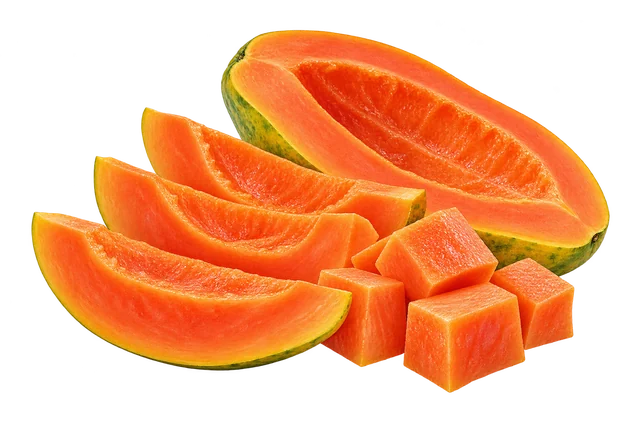
Ripe flesh is served alone or in fruit salads and desserts. This fresh-food use is distinct from taking seeds or extracts as a remedy.
- Drinks and processed sweets
Food or household practiceWhy this label?
Label describes the stated practice or evidence, not an efficacy grade. Exact form and cautions remain attached.
Extension records papaya in drinks, jams and candied preparations. Added sugar and processing change the food; a preservation recipe still needs its own safety validation.
2 supported uses; records describe the named form and are not treatment recommendations.
Historical-use additions reviewed 2026-10-09
Growing notes
Carica papaya culinary cultivars; guide describes the fruit plant, not medicinal seed production.
- Climate and habit
- A short-lived, tree-like tropical perennial, vulnerable to frost and wind. Start protected plants before warm weather; move outdoors only after frost risk and chilling have passed. Fruiting success needs sustained warmth. [1]
- Sun, soil and water
- Give at least six hours of sun, excellent drainage and even moisture. Avoid drought, standing water and exposed windy sites. [1]
- Pollination and harvest
- A bisexual plant can self-pollinate; female plants need pollen from a compatible male or bisexual plant. Confirm flower sex rather than assuming any pair will work. Pick fruit as green begins turning yellow. [1]
- Problems and management
- Plan for replacement rather than treating it as a long-lived orchard tree. Inspect for ringspot symptoms; nematodes can make container growing preferable. Keep the growing crown intact. [1]
Growing sources and regional guidance
Growing notes reviewed 2026-10-10
Regional reading paths
These sourced notes describe cultivation, trade, food traditions or material history. A regional connection does not claim exclusive origin.
North America
Domesticated/cultivated: Mexico/Mesoamerica and Caribbean.
Ripe pulp eaten as fruit; distinct from seed preparations.
Australia & Oceania
Introduced American tropical fruit cultivated in Hawaiʻi, with locally developed and commercially grown Solo-type cultivars.
Ripe flesh is eaten fresh or used in fruit preparations; seeds, latex and leaf extracts are separate materials.
Identity & detailed reference
Identity
Fruit pulp of Carica papaya. The common name pawpaw can also mean Asimina triloba in North America; the two fruits belong to different botanical families.
Ingredient details, preparation and research
Also known as: Papaya pulp; Ripe papaya
Source plant or material
Carica papaya
Plant family / material: Caricaceae
Forms and route
Ripe peeled flesh, fresh-cut fruit, drinks and desserts; green flesh is used in some vegetable preparations. Seeds and medicinal leaf or latex products are excluded.
Vitamins and minerals
Whole flesh retains fiber that strained drinks may lose. Candied, dried or sweetened preparations are not equivalent to an equal portion of fresh fruit.
Absorption and preparation
Carotenoid pigments are part of a mixed food matrix. No particular serving or pairing is established here as treatment, and enzyme products cannot stand in for whole-fruit nutrition.
Practical preparation
Choose sound fruit, allow edible ripeness appropriate to the variety, then wash, peel and remove seeds. Cut with clean utensils. Follow a trusted recipe for green-fruit vegetable dishes or preserved products.
Traditional and reported uses
- Fresh ripe fruit
- Drinks and processed sweets
Contraindications and cautions
- Avoid papaya if it has caused an allergic reaction; this card does not establish safety of latex or extracts.
- Wash the exterior before cutting, remove peel and seeds for this preparation, and keep cut fruit refrigerated.
- Do not transfer claimed effects or safety of medicinal seed, leaf or papain products to ripe fruit or vice versa.
Form-specific nutrition
University extension supplies fruit composition and horticultural information. These are food references rather than clinical trials proving that ordinary pulp treats parasites, digestive disease or other conditions.
Evidence limits
Regional history and food/material practice do not establish treatment efficacy. Composition depends on the named species, part and preparation; no medicinal dose or universal nutrient ranking is inferred.
Entry sources
- UF/IFAS: Papaya growing in the Florida home landscape
- UF/IFAS: Papaya, a tropical nutrition powerhouse
- CONABIO: La cocina tradicional mexicana
- UWI: Caribbean Food and Nutrition Institute collection
Reference entry 417 · Recorded content review: 2026-10-09 · Review scope and dates