


Key cautions
- Contains alcohol; do not use during pregnancy, when driving, or when alcohol is medically contraindicated.
- Choose a producer with hygienic processing and follow storage directions
- Do not give it to children or use it as a substitute for food, fluids or medical treatment.
What’s inside
Ethanol, residual sugars, lactic and other organic acids, and microbial polysaccharides that affect texture. Processing alters live microbial abundance.
Uses in brief

- Fermented sap beverage
History, folklore and reported uses
History, folklore and traditional uses
Mexican food-history sources distinguish pulque’s fermented aguamiel from the grain and fruit substrates of other regional beverages. Its biocultural history is substantial, but does not remove present-day alcohol risks.
Traditional, historical and reported uses
- Fermented sap beverage
Food or household practiceWhy this label?
Label describes the stated practice or evidence, not an efficacy grade. Exact form and cautions remain attached.
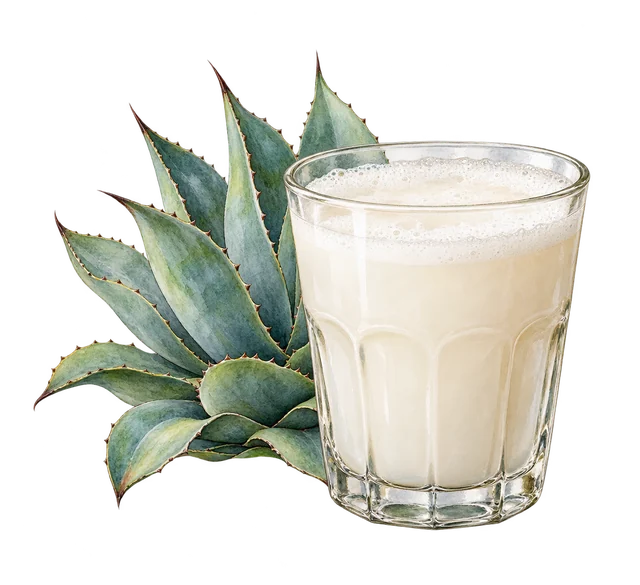
Pulque’s defining culinary use is an alcoholic drink obtained from maguey sap. Different agave species and production conditions contribute variation; no one strength or texture describes every batch.
1 supported uses; records describe the named form and are not treatment recommendations.
Historical-use additions reviewed 2026-10-09
Regional reading paths
These sourced notes describe cultivation, trade, food traditions or material history. A regional connection does not claim exclusive origin.
North America
Traditional processing: Mexico.
Alcoholic fermented agave-sap beverage; not distilled tequila.
Identity & detailed reference
Identity
Pulque from aguamiel of Agave salmiana and other suitable pulque-producing agaves. Tequila and mezcal involve different substrate processing and distillation.
Ingredient details, preparation and research
Source plant or material
Agave salmiana and related maguey species; sap fermentation
Plant family / material: Asparagaceae (agave substrate); mixed microbial community
Forms and route
Fresh or processed alcoholic fermented sap; flavored curados may include fruit, sweeteners or other ingredients. Raw sap is a separate material.
Vitamins and minerals
Alcohol and residual carbohydrate contribute energy. Historical descriptions of nourishment do not justify drinking it to meet protein, vitamin or mineral needs.
Absorption and preparation
Microbial composition cannot establish clinical probiotic benefit; alcohol remains relevant regardless of fermentation organisms.
Practical preparation
Treat as an alcoholic perishable beverage. Follow the producer’s refrigeration and shelf-life instructions; no household agave-tapping or fermentation procedure is supplied.
Traditional and reported uses
- Fermented sap beverage
Contraindications and cautions
- Contains alcohol; do not use during pregnancy, when driving, or when alcohol is medically contraindicated.
- Choose a producer with hygienic processing and follow storage directions. Traditional production is not a guarantee against contamination.
- Do not give it to children or use it as a substitute for food, fluids or medical treatment.
Bacterial diversity documented
Escalante and colleagues examined three pulque samples using 16S-rDNA methods, demonstrating diverse bacteria. Sequencing organisms in a beverage is not a trial showing benefits after consumption.
Shelf-life is process-specific
A controlled study compared thermosonication and pasteurization during refrigerated storage. Its specialized equipment and measured conditions cannot be translated into a safe home storage duration or an improvised heat treatment.
Evidence limits
Regional history and food/material practice do not establish treatment efficacy. Composition depends on the named species, part and preparation; no medicinal dose or universal nutrient ranking is inferred.
Entry sources
- Mexico Agriculture: Bebidas ancestrales fermentadas mexicanas
- UNAM: Bebidas fermentadas indígenas
- Escalante et al. (2004): Bacterial diversity in pulque
- Study: Thermosonication and storage quality of pulque
Reference entry 400 · Recorded content review: 2026-10-09 · Review scope and dates