


Key cautions
- Kvass can contain alcohol even when marketed as a soft drink; check the label if alcohol must be avoided.
- Rye, wheat or barley ingredients may supply gluten. Follow refrigeration and after-opening directions.
What’s inside
Water, variable residual sugars, organic acids, fermentation volatiles and potentially alcohol. Filtration and processing change solids and microbial content; the beverage is not nutritionally identical to bread.
Uses in brief

- Bread-based beverage
- Regional grain-ferment variations
History, folklore and reported uses
History, folklore and traditional uses
Traditional processing: Lithuania and neighbouring eastern-European food traditions.
Traditional, historical and reported uses
- Bread-based beverage
Food or household practiceWhy this label?
The linked sources document this material-specific use; no treatment outcome or universal safety is inferred.
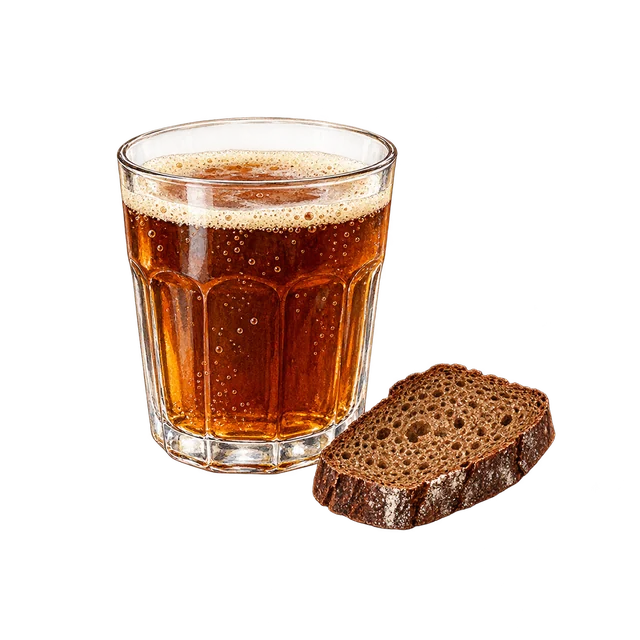
Lithuania Travel identifies gira as a traditional drink made with fermented rye bread. This is a beverage use of a grain substrate, not a claim that drinking it replaces whole-grain food.
- Regional grain-ferment variations
Food or household practiceWhy this label?
The linked sources document this material-specific use; no treatment outcome or universal safety is inferred.
Primary food research studies kvass made from rye bread with additional plant materials. Such trials document flavour and formulation differences rather than validating a general wellness drink.
2 supported material-specific uses; practices are not proof of treatment efficacy.
Historical-use additions reviewed 2026-10-09
Regional reading paths
These sourced notes describe cultivation, trade, food traditions or material history. A regional connection does not claim exclusive origin.
Europe
Traditional processing: Lithuania and neighbouring eastern-European food traditions.
Fermented bread beverage; alcohol and sugar content vary, so check product labelling.
Identity & detailed reference
Identity
Gira or bread kvass is a grain-based fermented beverage, often made from rye bread or cereal extracts. Beet kvass is a different vegetable ferment, and unfermented malt drinks may be separately labelled.
Ingredient details, preparation and research
Also known as: Gira; Bread kvass; Rye-bread kvass
Source plant or material
Rye-bread substrate, water and fermenting microorganisms
Plant family / material: Poaceae substrate; mixed fermentation microorganisms
Forms and route
Commercial bottled fermented beverages with specified storage and alcohol labelling. Recipes vary in grain, bread, sugar, microorganisms and additional plant ingredients.
Vitamins and minerals
Sugar and energy vary by formulation. Diluted or filtered grain extract should not inherit the fibre or micronutrient claims of a whole rye loaf.
Absorption and preparation
No special nutrient-absorption benefit is established. Fermentation-derived compounds and measured laboratory antioxidant activity are not evidence of a treatment effect.
Practical preparation
Choose a clearly labelled commercial product, check ingredients and alcohol information, and store as directed. This card does not give home fermentation or bottling instructions.
Combination notes
Treat as a labelled beverage with its own sugar, gluten and alcohol considerations rather than as a medicinal accompaniment.
Traditional and reported uses
- Bread-based beverage
- Regional grain-ferment variations
Contraindications and cautions
- Kvass can contain alcohol even when marketed as a soft drink; check the label if alcohol must be avoided.
- Rye, wheat or barley ingredients may supply gluten. Follow refrigeration and after-opening directions.
- Do not rely on an improvised sealed-bottle fermentation: contamination and pressure build-up are practical hazards.
Similar items and how they compare
- Fermented beets
Both may be called kvass.
Bread kvass uses cereal substrate and may contain gluten and alcohol.
Alcohol and product classification
Latvia’s official classification distinguishes fermented kvass from an unfermented malt beverage. Those categories illustrate why a familiar name is insufficient to determine composition in another jurisdiction.
Food-quality study, not clinical trial
The cited study measured quality, sensory and chemical characteristics of particular recipes. It did not establish disease treatment, and its results should not be transferred to every commercial bottle.
Evidence limits
No probiotic, alcohol-free, low-sugar or therapeutic guarantee is made. Latvian classifications are cited as regional context, not a universal legal definition.
Entry sources
- Lithuania Travel: Gira, fermented rye-bread beverage
- Primary study: Quality and sensory properties of kvass from mountain rye bread
- Latvian government: Quality and classification requirements for kvass and malt beverages
- NIDDK: Eating, diet and nutrition for celiac disease
Reference entry 388 · Recorded content review: 2026-10-09 · Review scope and dates