


Key cautions
- Hazelnut is a tree-nut allergen; avoid it with a known allergy and check mixed-food labels.
- Whole nuts present a choking risk for young children; use an age-appropriate texture.
What’s inside
Fixed oils rich in unsaturated fatty acids, protein, fibre and vitamin E, with minerals and skin polyphenols. Roasting changes flavour and moisture without making the food allergen-free.
Uses in brief

- Piedmont confectionery
- Roasted kernels and baking ingredient
History, folklore and reported uses
History, folklore and traditional uses
Cultivated and traditional processing: Piedmont, Italy, especially Langhe, Roero and Monferrato.
Traditional, historical and reported uses
- Piedmont confectionery
Food or household practiceWhy this label?
The linked sources document this material-specific use; no treatment outcome or universal safety is inferred.
Italy’s regional food account connects hazelnuts with Piedmont sweets, including chocolate-and-hazelnut traditions. The confection is a mixed food, not a substitute for describing the nut itself.
- Roasted kernels and baking ingredient
Food or household practiceWhy this label?
The linked sources document this material-specific use; no treatment outcome or universal safety is inferred.
Oregon State Extension discusses roasting and storage. Whole or chopped roasted kernels can provide flavour and texture; flour and paste behave differently in a recipe.
2 supported material-specific uses; practices are not proof of treatment efficacy.
Historical-use additions reviewed 2026-10-09
Regional reading paths
These sourced notes describe cultivation, trade, food traditions or material history. A regional connection does not claim exclusive origin.
Europe
Cultivated and traditional processing: Piedmont, Italy, especially Langhe, Roero and Monferrato.
Kernels in confectionery and savoury foods; distinct from hazelnut oil.
Identity & detailed reference
Identity
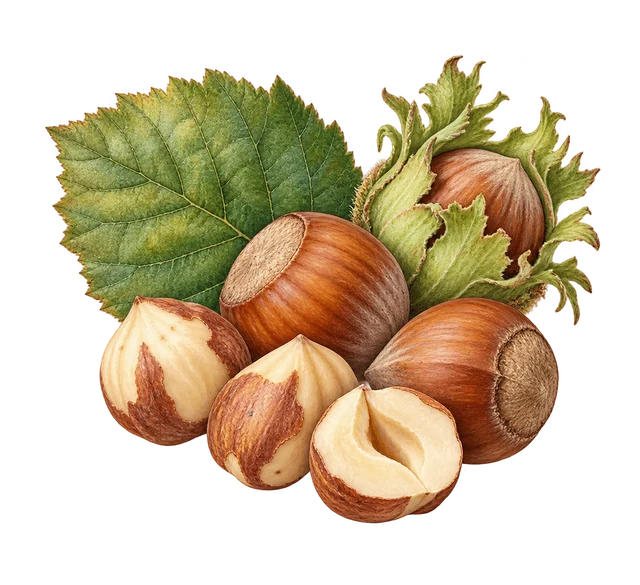
Hazelnuts are the edible kernels of Corylus avellana and named food cultivars or hybrids. This profile concerns kernels, not hazelnut leaves, concentrated skin extracts or pressed oil.
Ingredient details, preparation and research
Also known as: Filberts; Corylus avellana kernels
Source plant or material
Corylus avellana L.
Plant family / material: Betulaceae
Forms and route
Food-grade raw or roasted kernels, chopped nuts, nut meal and pastes. Sweet spreads and confectionery contain other ingredients; pressed hazelnut oil is a separate card.
Vitamins and minerals
Kernels provide energy, fat, protein and fibre. A sugar-rich hazelnut spread is not nutritionally equivalent to whole nuts, and removing the skin changes part of the fibre-rich fraction.
Absorption and preparation
Chewing or grinding breaks the kernel structure. This practical difference does not establish a required absorption-enhancing recipe or a clinical advantage for one texture.
Practical preparation
Buy sound food-grade nuts, store cool and sealed, and follow a culinary recipe for roasting. Ground nuts deteriorate faster because more oil is exposed to air.
Combination notes
Use whole kernels, meal or paste according to the recipe, considering nut allergy and the other ingredients in the finished food.
Traditional and reported uses
- Piedmont confectionery
- Roasted kernels and baking ingredient
Contraindications and cautions
- Hazelnut is a tree-nut allergen; avoid it with a known allergy and check mixed-food labels.
- Whole nuts present a choking risk for young children; use an age-appropriate texture.
- Reject mouldy or rancid nuts. Roasting does not make a spoiled batch acceptable.
Similar items and how they compare
- Hazelnut oil
Both derive from hazelnut kernels.
Oil is a separated fat fraction without the whole nut’s fibre.
Processing changes the comparison
USDA distinguishes named nut preparations. A raw-kernel composition reference cannot simply be assigned to sweetened paste, defatted meal or extracted oil.
Regional identity does not remove allergy
Piedmont’s cultivation and culinary record explains regional importance. A protected or prestigious origin does not change the need for allergen labelling and appropriate portions.
Evidence limits
No heart-disease prevention or skin-treatment outcome is claimed. Benefits measured for a diet or extract are not transferred to all hazelnut-containing foods.
Entry sources
- Italia.it: Piedmont hazelnuts and chestnut traditions
- Oregon State University Extension: Roasted hazelnuts and storage
- USDA SR28: Nuts and seed products, named edible forms
- FDA: Food allergies and tree-nut labels
- CDC: Choking hazards for young children
Reference entry 383 · Recorded content review: 2026-10-09 · Review scope and dates