


Key cautions
- Avoid with known caraway or related Apiaceae allergy; reactions are possible.
- Do not swallow an essential oil as a substitute for the culinary fruit or improvise medicinal doses. Persistent digestive symptoms need assessment.
What’s inside
The aromatic fraction contains carvone and limonene; the fruit also contains fixed oil, protein and fibre. Composition varies with origin and processing.
Uses in brief

- Bread and prepared-food seasoning
- Traditional herbal infusion
History, folklore and reported uses
History, folklore and traditional uses
Cultivated and traditional processing/use: Finland is a documented caraway producer supplying European food markets; European herbal use is assessed by EMA.
Traditional, historical and reported uses
- Bread and prepared-food seasoning
Food or household practiceWhy this label?
The linked sources document this material-specific use; no treatment outcome or universal safety is inferred.
Finnish agricultural reporting identifies bakery, spice and ready-meal manufacturers among caraway customers. The fruits supply a distinctive aromatic note without being interchangeable with cumin.
- Traditional herbal infusion
Traditional accountWhy this label?
The linked sources document this material-specific use; no treatment outcome or universal safety is inferred.
EMA describes fruit preparations within European traditional herbal practice. Its assessment concerns specified preparations and long-standing use, rather than proof that seasoning a meal treats a disorder.
2 supported material-specific uses; practices are not proof of treatment efficacy.
Historical-use additions reviewed 2026-10-09
Women’s Health: traditions, evidence and cautions
Historical use does not establish benefit or safety. Pregnancy, breastfeeding and fertility care require particular caution: food, tea, essential oil and concentrated extract are not interchangeable. These records are not treatment, dosing or pregnancy-management instructions. Discuss supplements with a qualified clinician or pharmacist; do not delay evaluation of persistent symptoms.
Caraway fruit
Carum carvi L.
- Plant part / material
- Ripe fruit, commonly called seed
- Preparation studied or reported
- Food spice and oral infusion; essential oil is separate.
West Bank survey respondents reported caraway for milk production. LactMed also records an opposite oversupply-reduction tradition in Persian medicine.
Lactation / milk-supply tradition
Traditional reports without reliable efficacy evidence
Reported or traditional useReported both to increase milk and to reduce oversupply in different traditions.
What the evidence supportsValid clinical evidence establishes neither action. One small older milk-production study was negative.
Small amounts of carvone can enter milk. Food-use history does not establish medicinal infant safety; conflicting traditions are not instructions for adjusting milk supply.
- The cited lactation evidence does not establish medicinal-use safety during pregnancy; postpartum traditions must not be extrapolated to pregnancy.
Regional reading paths
These sourced notes describe cultivation, trade, food traditions or material history. A regional connection does not claim exclusive origin.
Europe
Cultivated and traditional processing/use: Finland is a documented caraway producer supplying European food markets; European herbal use is assessed by EMA.
Aromatic dried fruit used in regional food and regulated herbal preparations.
Identity & detailed reference
Identity
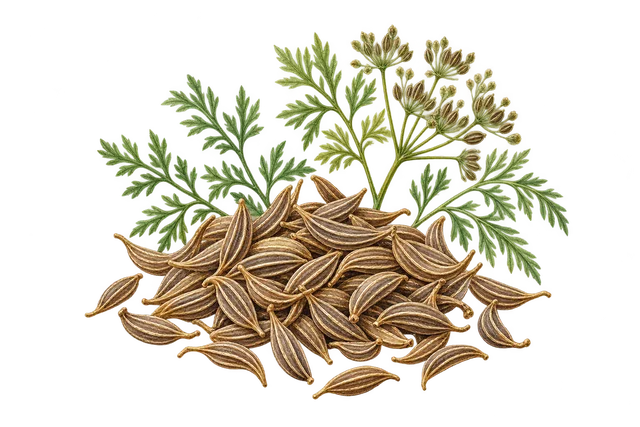
Caraway is the dried ripe fruit of Carum carvi, conventionally called a seed. It is not cumin, black cumin or dill, despite occasional overlapping vernacular names.
Ingredient details, preparation and research
Also known as: Caraway seed; Carum carvi
Source plant or material
Carum carvi L.
Plant family / material: Apiaceae
Forms and route
Whole or ground food-grade fruits; separately labelled herbal infusions and extracts. Distilled caraway essential oil is a concentrated, different preparation.
Vitamins and minerals
Ordinary spice portions contribute much less food energy and nutrients than a reference quantity of whole seeds. This card does not identify caraway as a major nutrient source.
Absorption and preparation
Its aroma is released by crushing and cooking. That culinary effect is not evidence that caraway increases absorption of another ingredient.
Practical preparation
Buy identified culinary caraway, keep it dry and protected from light, and crush only what the recipe needs. Follow the label for any medicinal preparation.
Combination notes
Use according to a bread or savoury-food recipe; strong aroma may dominate milder spices.
Traditional and reported uses
- Bread and prepared-food seasoning
- Traditional herbal infusion
Contraindications and cautions
- Avoid with known caraway or related Apiaceae allergy; reactions are possible.
- Do not swallow an essential oil as a substitute for the culinary fruit or improvise medicinal doses. Persistent digestive symptoms need assessment.
Similar items and how they compare
- Cumin
Both are aromatic Apiaceae fruits.
Carum carvi differs botanically and aromatically from Cuminum cyminum.
Fruit versus essential oil
The EMA assessment separates the whole fruit from its distilled volatile oil. Composition information from an oil study should not be converted into a food-serving benefit or an instruction to take the oil.
Regional agriculture, not exclusive origin
Finland’s production and export record supports a genuine northern-European connection. It does not mean all commercial caraway is Finnish or that this useful spice belongs to only one continent.
Evidence limits
Culinary and traditional-use evidence are presented separately. No treatment dose, child-use recommendation or efficacy claim is extrapolated from caraway oil studies.
Entry sources
- EMA: Carvi fructus
- Natural Resources Institute Finland: Finnish Agriculture and Rural Industries 2013, caraway production and food markets
- EMA: Carvi fructus, European assessment
- EMA: Caraway fruit and oil assessment report, 2014 draft chemistry and literature
Reference entry 368 · Recorded content review: 2026-10-09 · Review scope and dates