


Key cautions
- The rhizome can be tough and fibrous; cut or remove large pieces appropriately for the diner.
- Do not transfer laboratory extract findings to a household dose or apply untested rhizome preparations to skin disease.
What’s inside
Volatile aromatic compounds and phenolic constituents occur in the rhizome. A culinary slice is chemically and quantitatively different from a solvent extract.
Uses in brief

- Aromatic pieces in cooked dishes
- Pounded curry pastes
History, folklore and reported uses
History, folklore and traditional uses
Kew places the native range from southern China into western and central Malesia. NParks records sliced, chunked and pounded galangal in Southeast Asian cooking, reflecting cultivation and use beyond any single country.
Traditional, historical and reported uses
- Aromatic pieces in cooked dishes
Food or household practiceWhy this label?
The cited source documents this material, preparation or cultural practice; it does not establish treatment efficacy.
Slices or chunks flavour curries and other cooked preparations. Larger fibrous pieces may remain in the pot for infusion and be removed rather than eaten.
- Pounded curry pastes
Food or household practiceWhy this label?
The cited source documents this material, preparation or cultural practice; it does not establish treatment efficacy.
Finely pounded rhizome contributes fragrance and texture to aromatic pastes. Prepared pastes may contain salt, seafood or other allergens; their full ingredients matter.
2 supported featured food or cultural uses; no treatment claim.
Historical-use additions reviewed 2026-10-09
Regional reading paths
These sourced notes describe cultivation, trade, food traditions or material history. A regional connection does not claim exclusive origin.
Asia
Cultivated and traditional use: Southeast Asia, including Singapore, Malaysia and Thailand.
Rhizome flavours cooked curries and aromatic pastes.
Identity & detailed reference
Identity
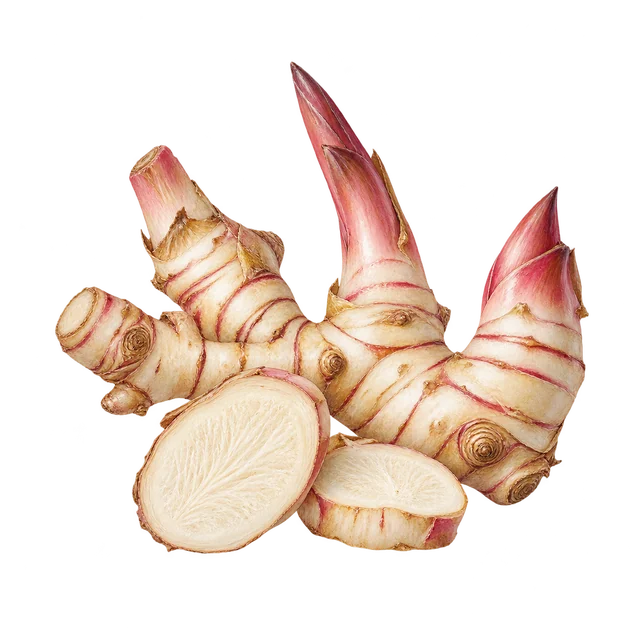
Alpinia galanga; the aromatic rhizome of greater galangal. Lesser galangal, fingerroot, sand ginger and ordinary ginger are different plants despite overlapping market names.
Ingredient details, preparation and research
Also known as: Galangal; Lengkuas; Blue ginger; Alpinia galanga
Source plant or material
Alpinia galanga
Plant family / material: Zingiberaceae
Forms and route
Fresh or frozen rhizome, dried slices, powder and prepared curry pastes. Leaf and seed uses are separate from the main rhizome food form.
Vitamins and minerals
A few aromatic slices are not a major nutrient serving. Whole-rhizome powder, fresh rhizome and strained broth have different compositions, so no universal nutrient numbers are assigned.
Absorption and preparation
Pounding helps distribute flavour. It does not establish improved absorption of the phenolic compounds measured in laboratory tests.
Practical preparation
Wash the purchased rhizome, trim damaged portions and slice or pound as the dish requires. Refrigerate fresh material or follow frozen-product directions; discard moldy pieces.
Combination notes
Use with other soup or curry aromatics for flavour; substitution with ginger changes the dish rather than creating an equivalent preparation.
Traditional and reported uses
- Aromatic pieces in cooked dishes
- Pounded curry pastes
Contraindications and cautions
- The rhizome can be tough and fibrous; cut or remove large pieces appropriately for the diner.
- Do not transfer laboratory extract findings to a household dose or apply untested rhizome preparations to skin disease.
Food chemistry is not clinical efficacy
A Malaysian study measured phenolic content and antioxidant activity in leaves and rhizomes of ginger relatives, including galangal. These laboratory assays do not show that eating a curry treats inflammation or infection.
Evidence limits
Culinary material and laboratory evidence are separated; no medicine or concentrated oil recommendations.
Entry sources
- NParks: Fort Canning Spice Garden trail
- NParks: Fort Canning Spice Garden trail
- Chan et al. (2007): Phenolic content and antioxidant activity of ginger leaves and rhizomes
- Kew POWO: Alpinia galanga
Reference entry 344 · Recorded content review: 2026-10-09 · Review scope and dates