


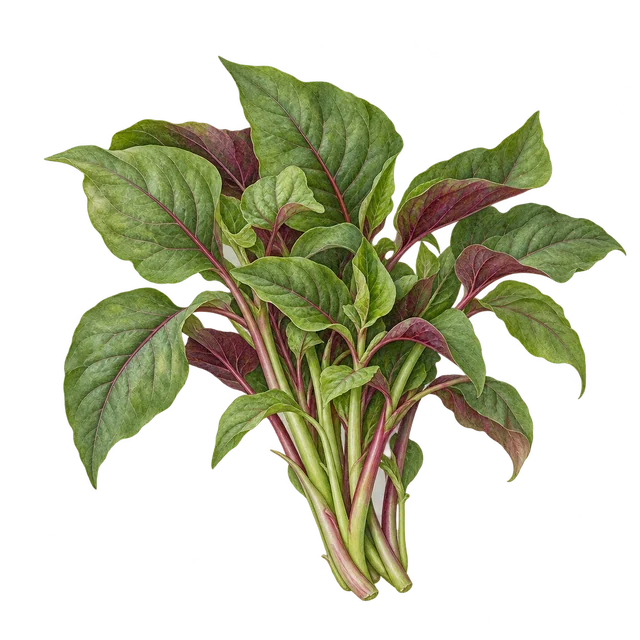
Key cautions
- Buy identified cultivated food greens and do not use this card for foraging. Contaminated irrigation water or roadside sites can introduce hazards not visible on leaves.
- If you have been advised to limit oxalate or vitamin K, discuss major changes in leafy-green intake with your care team rather than relying on a generic species list.
What’s inside
Leaf fiber, carotenoids, vitamins and minerals, with protein and oxalates varying by species, environment and preparation. Water loss during cooking changes weight-based comparisons.
Uses in brief

- Cooked greens
- Soups and mixed vegetable dishes
History, folklore and reported uses
History, folklore and traditional uses
Cultivated/naturalized: widespread African leafy-vegetable traditions; species origins vary.
Traditional, historical and reported uses
- Cooked greens
Food or household practiceWhy this label?
The source supports the named food, cosmetic or material practice; no treatment effect is inferred and the card’s form and safety limits remain attached.
The National Research Council documents vegetable amaranths as widespread boiled greens. Cooked tender material contributes a vegetable portion, with sauces or oils changing the final dish.
- Soups and mixed vegetable dishes
Food or household practiceWhy this label?
The source supports the named food, cosmetic or material practice; no treatment effect is inferred and the card’s form and safety limits remain attached.
The same account describes leaf and tender-stem foods across regions. Grain, leaf flour and fresh shoots remain different ingredients rather than interchangeable ways to obtain a fixed nutrient dose.
2 sourced featured uses; cultural or material records are not clinical efficacy evidence.
Historical-use additions reviewed 2026-10-09
Regional reading paths
These sourced notes describe cultivation, trade, food traditions or material history. A regional connection does not claim exclusive origin.
Africa
Cultivated/naturalized: widespread African leafy-vegetable traditions; species origins vary.
Cooked tender leaves and shoots.
Identity & detailed reference
Identity
Tender edible leaves and shoots of vegetable amaranths, including Amaranthus cruentus and A. dubius. This leafy-food group is distinct from amaranth grain and from unrelated greens called spinach.
Ingredient details, preparation and research
Source plant or material
Amaranthus species, including A. cruentus and A. dubius
Plant family / material: Amaranthaceae
Forms and route
Fresh food-market leaves and shoots, cooked greens and properly preserved commercial products. Unidentified roadside plants and grain-only composition references are outside the scope.
Vitamins and minerals
Leafy amaranth can contribute vitamins and minerals, but studies show nutritional diversity among species. Grain values, dry-leaf powder and cooked leaves should not share one nutrition panel.
Absorption and preparation
Oxalate and phytate can influence availability of minerals, while cooking changes retention and water content. Total measured calcium or iron is not an absorbed amount.
Practical preparation
Wash commercially sourced greens under safe running water, remove damaged material and cook in a familiar dish. Keep raw greens separate from animal-food contamination and refrigerate leftovers.
Traditional and reported uses
- Cooked greens
- Soups and mixed vegetable dishes
Contraindications and cautions
- Buy identified cultivated food greens and do not use this card for foraging. Contaminated irrigation water or roadside sites can introduce hazards not visible on leaves.
- If you have been advised to limit oxalate or vitamin K, discuss major changes in leafy-green intake with your care team rather than relying on a generic species list.
Diversity is measurable
Kenyan research compared leafy amaranths and found variation, while another study measured minerals in several indigenous vegetables. These food-composition analyses do not identify a single healthiest species or establish disease treatment.
Evidence limits
Named food-vegetable scope, not universal edibility of Amaranthus or a substitute for individualized stone or anticoagulant advice.
Entry sources
- National Research Council, Lost Crops of Africa: Amaranth
- Nutritional diversity of leafy amaranth species grown in Kenya
- X-ray fluorescence analysis of ten African indigenous leafy vegetables in Nairobi
Reference entry 330 · Recorded content review: 2026-10-09 · Review scope and dates