


Key cautions
- Cook grain and flour appropriately and discard moldy material. Food history does not make raw flour or uncontrolled home germination risk-free.
- Do not use finger millet as a substitute for prescribed calcium or individualized infant feeding. Check blends and cross-contact when gluten avoidance is needed.
What’s inside
Starch, cereal protein, fiber and minerals including calcium. Seed-coat constituents and phytate influence nutritional comparisons and mineral availability.
Uses in brief

- Cooked porridge
- Flour-based foods
History, folklore and reported uses
History, folklore and traditional uses
African domestication/cultivation: East Africa, including Uganda and Kenya.
A closer look at its history
An African crop with a second life as ragi
Finger millet’s food history connects eastern Africa with South Asia, where it is widely known as ragi. The National Research Council’s 1996 account treats India as an important later center of cultivation and crop improvement, while locating the crop’s origins in Africa. It records highland and lowland forms, grain and brewing types, and early- and late-maturing cultivars. That diversity reflects choices for particular climates and meals. The crop’s movement therefore carried a flexible cereal, not a single recipe, and subsequent selection in India became part of its continuing history.
A store of grain and a source of malt
The same account describes the ability of unthreshed finger-millet heads to resist insect damage during storage, a valuable attribute when harvests must bridge uncertain seasons. Cooks used the grain in thick porridges and flour-based foods; malted grain also supplied enzymes that break down starch in brewing. In Ethiopia it was recorded in arake, a distilled drink, while popped finger millet was enjoyed in India. These contrasting uses explain why one harvest could be managed as a staple, a reserve and a processing ingredient. The historical storage observations are not a shelf-life guarantee for a modern product.
Additional history reviewed 2026-10-09
Traditional, historical and reported uses
- Cooked porridge
Food or household practiceWhy this label?
The source supports the named food, cosmetic or material practice; no treatment effect is inferred and the card’s form and safety limits remain attached.
The National Research Council records finger millet as a cereal for porridge-type foods. Its texture and flavor vary with milling, water and the accompanying ingredients.
- Flour-based foods
Food or household practiceWhy this label?
The source supports the named food, cosmetic or material practice; no treatment effect is inferred and the card’s form and safety limits remain attached.
Finger millet flour enters regional cooked cereal preparations. Milling and subsequent cooking distinguish this from raw grain and from concentrated nutritional powders.
2 sourced featured uses; cultural or material records are not clinical efficacy evidence.
Historical-use additions reviewed 2026-10-09
Regional reading paths
These sourced notes describe cultivation, trade, food traditions or material history. A regional connection does not claim exclusive origin.
Africa
African domestication/cultivation: East Africa, including Uganda and Kenya.
Grain flour used in porridges and other cereal foods.
Identity & detailed reference
Identity
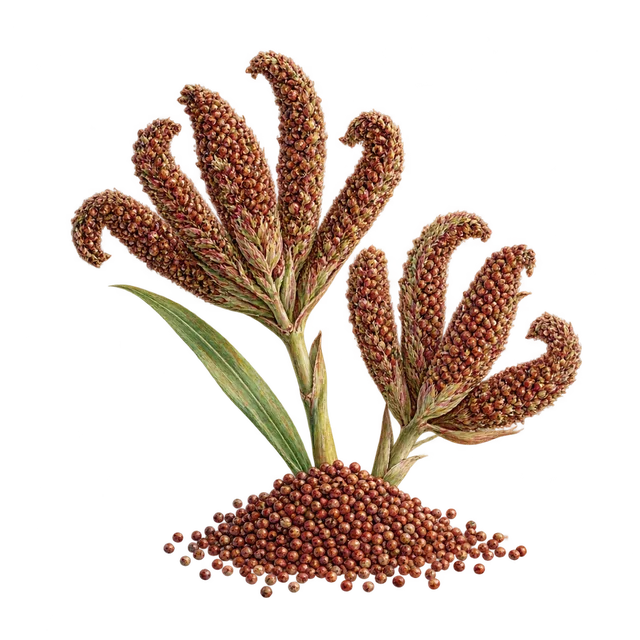
The grain of Eleusine coracana, finger millet. It is botanically different from pearl millet and sorghum even where market labels group them together as millet.
Ingredient details, preparation and research
Source plant or material
Eleusine coracana
Plant family / material: Poaceae
Forms and route
Whole grain, milled flour and cooked porridges or other cereal foods. Malted and fermented preparations have undergone additional processing and should be named separately.
Vitamins and minerals
Finger millet can contribute calcium and other nutrients, but serving contribution depends on the flour, grain fractions and dilution. It should not be presented as nutritionally complete or equivalent to every calcium-rich food.
Absorption and preparation
Calcium content and calcium absorbed are different measurements. Processing changes both total mineral and inhibitory compounds, so a higher percentage available need not mean a higher absolute amount retained.
Practical preparation
Use a named food-grade grain or flour and follow reliable cooking directions. Keep dry flour protected from dampness and prepare porridges with suitable safe water and storage.
Traditional and reported uses
- Cooked porridge
- Flour-based foods
Contraindications and cautions
- Cook grain and flour appropriately and discard moldy material. Food history does not make raw flour or uncontrolled home germination risk-free.
- Do not use finger millet as a substitute for prescribed calcium or individualized infant feeding. Check blends and cross-contact when gluten avoidance is needed.
Calcium evidence needs processing context
The calcium review and FAO’s protein chapter compile studies using different processing methods and models. These findings support attention to preparation, not a universal calcium-absorption figure or proof that finger millet alone prevents deficiency.
Evidence limits
Cereal-food profile; no mineral dose, homemade sprouting protocol or treatment claim is inferred.
Entry sources
- National Research Council, Lost Crops of Africa: Finger Millet
- Finger millet calcium: evidence review and processing limitations
- FAO: Sorghum and millets in human nutrition, protein
Reference entry 323 · Recorded content review: 2026-10-09 · Review scope and dates