


Key cautions
- Do not use buchu to delay assessment of urinary pain, fever, blood in urine or other possible infection. The reviewed evidence does not establish an effective infection treatment.
- Avoid self-directed concentrated or essential-oil use, especially during pregnancy or breastfeeding. Historical brandy tinctures add alcohol exposure and are not interchangeable with tea.
- Confirm species and stop after irritation or an adverse reaction; natural fragrance is not automatically gentle.
What’s inside
Leaf volatile compounds include menthone-related constituents, diosphenol and variable pulegone, alongside flavonoids. Species and preparation affect which compounds are present and at what concentration.
Uses in brief

- Attributed leaf preparations
- Aromatic and cosmetic heritage
History, folklore and reported uses
History, folklore and traditional uses
Native/cultivated: South Africa’s Western Cape; Khoi-associated traditions.
Traditional, historical and reported uses
- Attributed leaf preparations
Traditional accountWhy this label?
An attributed cultural or herbal practice is recorded; it does not establish treatment benefit or a safe medicinal dose.
SANBI documents traditional aqueous leaf preparations and tinctures. These establish recorded practice, not approval to treat urinary infection or to reproduce historical medicinal recipes.
- Aromatic and cosmetic heritage
Food or household practiceWhy this label?
The source supports the named food, cosmetic or material practice; no treatment effect is inferred and the card’s form and safety limits remain attached.
South Africa’s agriculture department records longstanding aromatic/cosmetic traditions and commercial flavor production. Distilled flavor ingredients belong to a controlled formulation context, rather than home essential-oil ingestion.
2 sourced featured uses; cultural or material records are not clinical efficacy evidence.
Historical-use additions reviewed 2026-10-09
Regional reading paths
These sourced notes describe cultivation, trade, food traditions or material history. A regional connection does not claim exclusive origin.
Africa
Native/cultivated: South Africa’s Western Cape; Khoi-associated traditions.
Documented aromatic and traditional herbal material; concentrated oil is separate.
Identity & detailed reference
Identity
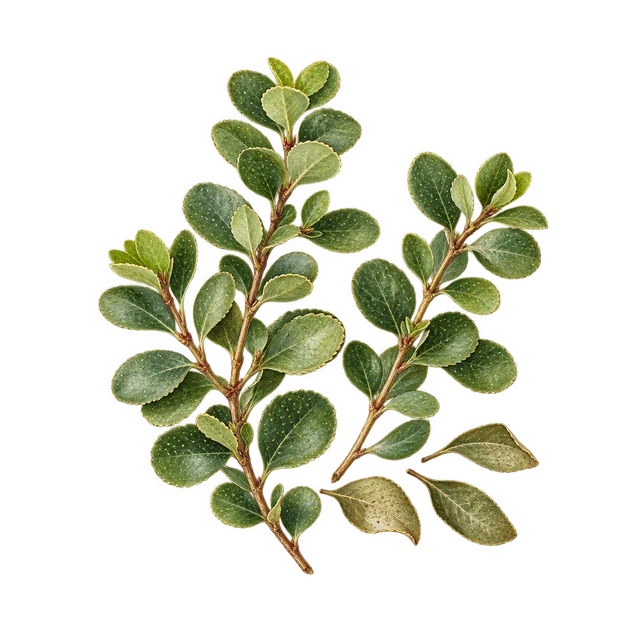
The aromatic leaves of Agathosma betulina, round-leaf buchu. Agathosma crenulata and other plants called buchu are chemically distinct; the leaf is not equivalent to distilled buchu oil.
Ingredient details, preparation and research
Source plant or material
Agathosma betulina
Plant family / material: Rutaceae
Forms and route
Identified dried leaf and commercially prepared leaf products; historical infusions and brandy tinctures are documented. Essential oil is a separate concentrated flavor/fragrance material.
Vitamins and minerals
No nutritional serving role is established. Volatile-oil percentages in a leaf assay do not turn buchu into a vitamin or mineral supplement.
Absorption and preparation
Water, alcohol and distillation extract different chemicals. No reliable equivalence between leaf quantity, tincture and oil, or absorption-enhancing pairing, is established here.
Practical preparation
If choosing a commercial preparation, use only its intended route and instructions. This reference intentionally supplies no medicinal infusion strength, tincture recipe or internal oil dose.
Traditional and reported uses
- Attributed leaf preparations
- Aromatic and cosmetic heritage
Contraindications and cautions
- Do not use buchu to delay assessment of urinary pain, fever, blood in urine or other possible infection. The reviewed evidence does not establish an effective infection treatment.
- Avoid self-directed concentrated or essential-oil use, especially during pregnancy or breastfeeding. Historical brandy tinctures add alcohol exposure and are not interchangeable with tea.
- Confirm species and stop after irritation or an adverse reaction; natural fragrance is not automatically gentle.
Historical fame versus clinical support
The modern source review critically revisits buchu’s reputation and notes unresolved doubts about urinary-tract-infection use. Chemical identification and historical pharmacopoeial inclusion do not establish modern clinical effectiveness.
Evidence limits
Historical/aromatic reference with explicit clinical limitations; not a recommendation for routine medicinal ingestion.
Entry sources
- South African Department of Agriculture: Buchu production brochure
- SANBI medicinal monograph: Agathosma betulina
- Buchu: Rightfully forgotten or underutilized? Evidence and historical source review
Reference entry 305 · Recorded content review: 2026-10-09 · Review scope and dates