


Key cautions
- Iodine varies; excess can affect the thyroid.
- Food wakame is not an iodine supplement.
- Desalted does not mean sodium-free.
What’s inside
Dietary fiber and minerals including iodine and sodium. Their amounts depend on the product, processing and the quantity actually eaten.
Uses in brief

- Soup ingredient
- Vinegared seaweed salad
- Rehydrated dried pieces
History, folklore and reported uses
History, folklore and traditional uses
Wakame belongs to the coastal food traditions of Japan, Korea and China. FAO documents Undaria pinnatifida from these temperate shores and its cultivation and processing into food products.
Japan’s agriculture ministry describes seaweed distribution expanding during the Edo period and records Naruto haiboshi wakame from Tokushima: a regional ash-dried product. This historical processing account is not a home instruction to add ash to food. Korean cook Maangchi documents miyeokguk as both everyday soup and birthday food.
Traditional, historical and reported uses
- Wakame in soups
Food or household practiceWhy this label?
The cited source records a food preparation or cultural practice; no treatment effect is inferred. Relevant safety qualifications remain attached.
FAO records wakame in soybean and other soups, with cut dried pieces also used in noodle products. Prepare the purchased form as directed before adding it to a dish.
- Vinegared seaweed salad
Food or household practiceWhy this label?
The cited source records a food preparation or cultural practice; no treatment effect is inferred. Relevant safety qualifications remain attached.
FAO documents Korean vinegared wakame salads. Use seaweed intended for food and prepared for eating; vinegar dressing does not establish the safety of an unknown harvest.
- Korean birthday miyeokguk
Traditional accountWhy this label?
The cited source records a food preparation or cultural practice; no treatment effect is inferred. Relevant safety qualifications remain attached.
Maangchi’s first-person cooking account describes simmered miyeok soup with beef and its birthday tradition, linked to remembering one’s mother. The associated postpartum custom is cultural history, not evidence that seaweed speeds recovery or a recommendation for frequent large portions.
- Naruto ash-dried wakame
Traditional accountWhy this label?
The cited source records a food preparation or cultural practice; no treatment effect is inferred. Relevant safety qualifications remain attached.
MAFF records a Tokushima preservation craft producing Naruto haiboshi wakame. Buy the finished food product and follow its preparation directions; the historical mention is not a household ash-processing recipe.
4 supported featured uses; culinary and cultural records do not establish treatment benefits.
Historical-use additions reviewed 2026-10-09
Story sources
- FAO: A guide to the seaweed industry, section 8.5 Wakame
- Japan MAFF: Seaweed products, Traditional Foods in Japan
- Maangchi: Seaweed soup with beef (Miyeokguk)
- Japan MEXT food composition database: Wakame, blanched and salted products, desalted; food 09045
- NIH ODS: Iodine, health-professional fact sheet
- NIH ODS: Iodine, consumer fact sheet
- NIH ODS: Vitamin K, health-professional fact sheet
- NCBI Taxonomy: Undaria pinnatifida
- Japan MEXT: Notes on Foods, wakame food forms
Regional reading paths
These sourced notes describe cultivation, trade, food traditions or material history. A regional connection does not claim exclusive origin.
Asia
Cultivated/traditional processing: Japan, Korea and China.
Edible brown seaweed in soups and other foods.
Identity & detailed reference
Identity
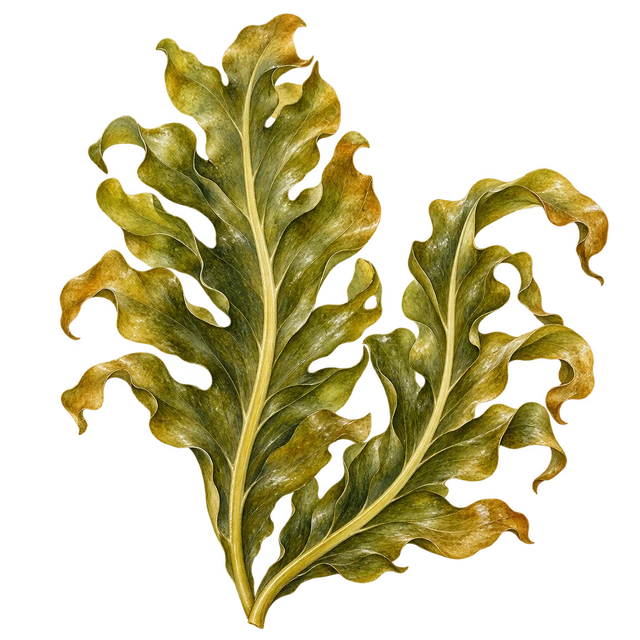
Edible wakame seaweed, Undaria pinnatifida. This card covers identified food-grade seaweed, not all kelps, sea moss, iodine tablets or concentrated fucoidan extracts.
Ingredient details, preparation and research
Also known as: Undaria pinnatifida; Miyeok; Miyuk; Sea mustard; Qundai cai; Wakame seaweed
Source plant or material
Undaria pinnatifida (brown seaweed)
Plant family / material: Alariaceae
Forms and route
Dried pieces to rehydrate; blanched and salted wakame to desalt; prepared soup or salad. Mekabu is the frilled reproductive portion of the same seaweed and is a different food form from the usual blades.
Vitamins and minerals
MEXT food 09045 reports 2.9 g fiber, 530 mg sodium and 810 micrograms iodine per 100 g edible blanched-and-salted wakame after desalting. This is a composition reference, not a recommended portion or a promise about any brand. It does not describe 100 g dry wakame, fresh unprocessed seaweed or a dressed salad.
Absorption and preparation
No absorption-enhancing pairing is required. Rehydration and desalting change the food being measured; a table value cannot predict the iodine absorbed from every product.
Practical preparation
Check whether the product is dried, salt-preserved or already prepared. Rehydrate dried pieces or desalt salted wakame according to the package, drain and cut if needed. Keep prepared products refrigerated as directed. Use the weight and form specified by a recipe rather than substituting equal weights of dry and hydrated seaweed.
Combination context
No special combination is established to neutralize iodine or turn wakame into a treatment.
Combination notes
Use in broth, noodle dishes or a vinegared salad for texture and flavor. Account for sodium in miso, soy sauce, fish sauce and dressings.
Traditional and reported uses
- Soup ingredient
- Vinegared seaweed salad
- Dried pantry ingredient
Contraindications and cautions
- Iodine varies substantially among seaweeds and products. Too much can disrupt thyroid function; do not use wakame as a measured iodine supplement or a thyroid remedy.
- If you have thyroid disease, take thyroid-related medication, or have been prescribed a low-iodine diet, ask your care team about seaweed. During pregnancy or breastfeeding, do not replace individualized iodine advice with frequent large seaweed portions.
- Desalting does not mean iodine-free or sodium-free. Salted products, soup seasonings and prepared salad dressings can contribute sodium; follow the actual product label.
- Buy correctly labeled food-grade seaweed from a reliable supplier. This card does not identify shore-collected seaweed or establish that any collection site is safe.
- Wakame contains vitamin K. If taking warfarin, keep intake consistent and discuss major dietary changes with your care team.
Similar items and how they compare
- Kombu
Another brown seaweed used in East Asian cooking.
Usually derived from other kelp species and often used for stock; its composition and iodine values must not be transferred to wakame.
- Nori
Another edible seaweed.
A red-algal food commonly sold as sheets, not Undaria pinnatifida.
- Mekabu and seaweed extracts
May originate from Undaria pinnatifida.
Mekabu is a distinct anatomical food portion; concentrated extracts are supplements and are not equivalent to a serving of wakame blades.
Food composition needs an exact form
The MEXT record used here is specifically blanched, salted and then desalted wakame. Dry weight and hydrated weight are not interchangeable; values for the raw blade or reproductive portion should not be substituted.
Iodine is a nutrient with an upper boundary
NIH ODS describes wide variation in commercial seaweed iodine and thyroid problems from excess. A single food-table figure cannot set a safe frequency for every person or identify a standardized iodine dose.
Culinary history is not treatment evidence
The sources establish food processing, soups, salads and cultural customs. They do not establish cancer treatment, cholesterol treatment or postpartum recovery from eating wakame; concentrated ingredient studies are outside this card.
Evidence limits
This is an identified food-seaweed card, not a supplement review, clinical dosing guide or foraging guide. Older FAO production figures and broad nutrient comparisons are not presented as current rankings. No universal safe daily wakame amount is inferred.
Entry sources
- FAO: A guide to the seaweed industry, section 8.5 Wakame
- Japan MAFF: Seaweed products, Traditional Foods in Japan
- Maangchi: Seaweed soup with beef (Miyeokguk)
- Japan MEXT food composition database: Wakame, blanched and salted products, desalted; food 09045
- NIH ODS: Iodine, health-professional fact sheet
- NIH ODS: Iodine, consumer fact sheet
- NIH ODS: Vitamin K, health-professional fact sheet
- NCBI Taxonomy: Undaria pinnatifida
- Japan MEXT: Notes on Foods, wakame food forms
Reference entry 290 · Recorded content review: 2026-10-09 · Review scope and dates