


Key cautions
- With warfarin or other vitamin-K antagonists, keep intake consistent and discuss food or supplement changes. Do not suddenly avoid greens or start K2.
- No established UL does not mean unlimited supplementation is safe. Unexplained bleeding or bruising requires assessment.
- Long courses of antibiotics combined with poor food intake deserve particular attention. Some cephalosporin antibiotics can also interfere with vitamin K action. A pharmacist or clinician can assess the actual medicine, duration and nutritional context; a routine short course does not automatically require a vitamin K supplement.
What’s inside
The K1 and K2 names describe related molecules, not a ranking of effectiveness. Food analyses, supplement labels and prescription products need to be read with the exact form and unit in mind.
NIH Office of Dietary Supplements: Vitamin K (Health Professional Fact Sheet)
K1, K2 and source materials
K1 is phylloquinone (phytonadione in medicines), chiefly from leafy plants. K2 comprises menaquinones such as MK-4 and MK-7; food sources include animal and fermented materials. Fermentation organism and production conditions affect content. These isolated vitamin ingredients have no botanical family. K3/menadione is not an appropriate human supplement substitute.
NIH Office of Dietary Supplements: Vitamin K (Health Professional Fact Sheet)
What the MK numbers mean
MK-4 and MK-7 have different lengths of chemical side chain. Most menaquinones originate in bacteria, but the body can also make MK-4 from K1 without bacterial action. The amount of vitamin K supplied by intestinal bacteria is uncertain, so their presence does not remove the need for a suitable diet.
NIH Office of Dietary Supplements: Vitamin K (Health Professional Fact Sheet)
How vitamin K enables protein function
Vitamin K helps an enzyme add chemical groups to specific proteins, a process called carboxylation. These changes allow the proteins to bind calcium. Relevant proteins include clotting factors, osteocalcin in bone and matrix Gla protein in blood vessels and cartilage. Their different jobs explain why a clotting vitamin also attracts bone and cardiovascular research.
NIH Office of Dietary Supplements: Vitamin K (Health Professional Fact Sheet) · EFSA: Dietary reference values for vitamin K (2017)
Food amounts are form-specific
The food examples below distinguish raw spinach, boiled broccoli and soybean oil. Their values measure K1, not the full family of K compounds. Natto’s separate figure measures MK-7; it should not be substituted into a K1-only food record or assumed to describe every fermented soybean product.
NIH Office of Dietary Supplements: Vitamin K (Health Professional Fact Sheet)
Micrograms, milligrams and intake standards
A microgram, written mcg or µg, is one-thousandth of a milligram (mg). An adequate intake, or AI, estimates usual total nutritional intake when evidence is insufficient to set a recommended dietary allowance. It is not a prescription dose. The US and European adult reference figures and their different scope are explained in the research section.
NIH Office of Dietary Supplements: Vitamin K (Health Professional Fact Sheet) · EFSA: Dietary reference values for vitamin K (2017)
Uses in brief

- Adequate dietary vitamin K and clinician-managed deficiency or clotting-related treatment.
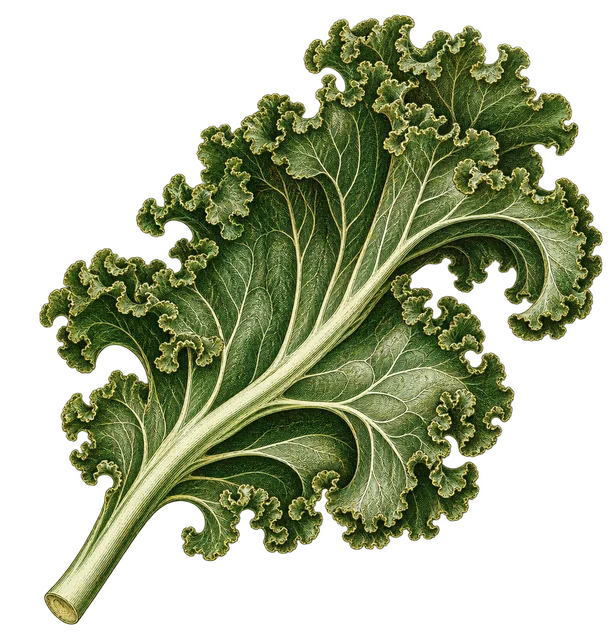
- Leafy greens supply K1; fermented foods such as natto can provide K2.
History, folklore and reported uses
Deficiency and who needs assessment
Clinically important deficiency is rare in healthy adults eating a varied diet. Fat-malabsorption conditions, including cystic fibrosis, coeliac disease and short bowel syndrome, and bariatric surgery can increase risk. These situations may need monitoring and clinician-directed replacement. A clotting-time test can reveal a serious functional problem, but it does not provide a complete measure of every vitamin-K-dependent process in the body.
NIH Office of Dietary Supplements: Vitamin K (Health Professional Fact Sheet)
Preventing newborn bleeding
Only small amounts of vitamin K cross the placenta, and breast milk contains little. Newborns therefore need a separate prevention plan, rather than an adult food or supplement approach. The injection into a muscle at birth prevents vitamin K deficiency bleeding, including dangerous bleeding into the brain that may occur without an earlier warning. CDC dates routine American Academy of Pediatrics recommendations to 1961. Discuss the injection with the maternity team before delivery. In US guidance, oral vitamin K is not recommended as a substitute; maternal supplementation does not provide enough through breast milk.
CDC: How to Protect Babies from Life-threatening Bleeding; routine vitamin K since 1961 · CDC: Vitamin K and Breastfeeding
Japanese MK-4 treatment and bone research
Japan and other parts of Asia have used a pharmacological MK-4 dose for osteoporosis, a condition involving fragile bones. NIH describes 45 mg daily, equivalent to 45,000 mcg: a medical-treatment amount, not a nutritional target or an instruction for self-treatment. This preparation is different from the microgram-dose MK-7 commonly associated with natto supplements. The research section below explains why protein activation and bone-density findings do not automatically establish fracture prevention.
NIH Office of Dietary Supplements: Vitamin K (Health Professional Fact Sheet)
Why arteries became a research topic
Matrix Gla protein helped focus attention on whether vitamin K influences calcification, the buildup of calcium deposits in blood vessels. An artery-wall finding and a heart-valve finding are not interchangeable. The human-study section below distinguishes the 2022 valve trial from the 2026 coronary-artery trial, rather than presenting either as proof that a supplement prevents heart attacks.
NIH Office of Dietary Supplements: Vitamin K (Health Professional Fact Sheet) · Diederichsen et al. (2022): Vitamin K2 and D in patients with aortic valve calcification · Vossen et al. (2026): Two years of MK-7 and coronary artery calcification
Creams for bruising
Modern cosmetic practice has investigated vitamin K creams after procedures. A small 2002 randomized, blinded study enrolled 22 patients receiving facial laser treatment. Pretreatment did not significantly reduce bruising; the post-treatment group had lower bruising-severity scores on the vitamin-K-treated side than on the vehicle-treated side. This limited, procedure-specific evidence does not establish a treatment for unexplained bruising or show that oral K2 has the same effect.
Shah and colleagues, 2002: Topical vitamin K and bruising after laser treatment
A bleeding disorder reveals vitamin K
Henrik Dam’s restricted-diet experiments in chicks revealed bleeding that the known vitamins did not prevent. By the mid-1930s, papers described a new antihemorrhagic, or bleeding-preventing, factor. Dam and Edward Doisy shared the 1943 Nobel Prize: Dam for discovery of the vitamin and Doisy for establishing its chemical nature. This was experimental nutrition research, not a traditional herbal remedy.
Dam and Schønheyder, 1936: The occurrence and chemical nature of vitamin K · Nobel Prize: Medicine 1943, Dam and Doisy · Dam (1934): Haemorrhages in chicks reared on artificial diets
Natto, a food history older than vitamin K2
Japan’s agriculture ministry records a Mito origin legend in which simmered beans carried in straw for a warrior’s horses became stringy and were enjoyed as food. It is a legend, not a verified discovery date. Natto was an everyday household food during the Edo period, from 1603 to 1867, served in soup or with soy sauce. Railway-platform sales from 1889 helped make Mito natto famous beyond the region. Its food history preceded identification of MK-7.
Japan Ministry of Agriculture, Forestry and Fisheries: Natto, Ibaraki history and culture · NIH Office of Dietary Supplements: Vitamin K (Health Professional Fact Sheet)
Fermentation and regional food craft
Mito, in Ibaraki Prefecture, became associated with small-bean natto. The regional account links this to early-maturing soybeans grown before typhoon season that were too small for preferred soy-sauce or miso production. Modern production uses Bacillus subtilis var. natto under controlled temperature and humidity; traditional straw-wrapped natto remains a regional specialty. These are food-production traditions, not evidence that natto treats disease.
Japan Ministry of Agriculture, Forestry and Fisheries: Natto, Ibaraki history and culture
Identity & detailed reference
Identity
Fat-soluble vitamin needed to activate proteins involved in normal clotting and bone metabolism. K1 is abundant in leafy greens, broccoli, and some vegetable oils. K2 forms occur in natto and variable amounts in cheeses, eggs, and meats.
Ingredient details, preparation and research
Source plant or material
No single plant source. Leafy greens supply K1; fermented and animal foods supply K2. Supplement source varies.
Plant family / material: Not applicable: isolated vitamin, not a botanical.
Forms and route
K1 (phylloquinone or phytonadione) and K2 forms such as MK-4 or MK-7. They are sold alone or with vitamin D and calcium. K3 (menadione) is not an appropriate human dietary-supplement substitute.
Food sources
USDA K1 estimates: 1 cup raw spinach (30 g), 145 mcg; ½ cup chopped boiled broccoli (78 g), 110 mcg; 1 tablespoon soybean oil (13.6 g), 25 mcg. NIH reports 850 mcg MK-7 in 3 oz (about 85 g) natto: approximately 400 mcg in a 40 g small pack, calculated proportionally, with substantial product variation. Do not treat a USDA phylloquinone-only natto record as total K2.
Absorption and preparation
Some meal fat helps release and absorb K1 from leafy vegetables; an oil-based dressing is a practical example. Food matrix and K form affect uptake and circulation time, but higher absorption does not itself prove better fracture or cardiovascular outcomes. There is no established universal K2:D ratio. With warfarin, consistency and coordinated changes take priority over trying to maximize intake.
Nutritional role and uses
- Required for activation of clotting factors and proteins involved in bone metabolism.
- Deficiency treatment and reversal of vitamin-K-antagonist effects are medical uses with condition-specific products and monitoring.
- Routine K2 supplements have not established general-population fracture or cardiovascular-event prevention. A 2026 coronary-calcification trial adds a favorable imaging result in selected patients, with uncertain clinical significance.
Contraindications and cautions
- Warfarin and similar vitamin-K-antagonist anticoagulants require a consistent intake from food and supplements. Do not suddenly avoid greens, start K2, or stop a K-containing product without the anticoagulation team. Orlistat and bile-acid sequestrants can reduce absorption; prolonged antibiotics can sometimes affect status. No upper intake limit has been established, but important medication interactions remain. Unexplained bruising or bleeding needs medical assessment, not self-treatment with vitamin K.
- Long courses of antibiotics combined with poor food intake deserve particular attention. Some cephalosporin antibiotics can also interfere with vitamin K action. A pharmacist or clinician can assess the actual medicine, duration and nutritional context; a routine short course does not automatically require a vitamin K supplement.
Similar items and how they compare
- Vitamin D
Both are fat-soluble vitamins involved in bone physiology and are commonly combined in products marketed for bone support.
D helps regulate calcium availability; K enables carboxylation of proteins, including osteocalcin and clotting factors.
- Calcium
Both contribute to normal bone biology and blood clotting, although they perform different chemical jobs in those systems.
Calcium is a mineral and signaling ion; vitamin K is a cofactor for protein modification.
US adult AI and jurisdiction
US adult AI, rather than RDA: men 120 mcg/day; women 90 mcg/day; pregnancy/lactation 90 mcg/day for ages 19+. EFSA sets an adult AI of 70 mcg/day of phylloquinone, also for pregnancy/lactation. No separate universal K2 requirement or D:K dosing ratio has been established. No US UL has been set because toxicity evidence is insufficient, not because every amount is proven safe.
Food portions and the K2 data gap
USDA K1 estimates: 1 cup raw spinach (30 g), 145 mcg; ½ cup chopped boiled broccoli (78 g), 110 mcg; 1 tablespoon soybean oil (13.6 g), 25 mcg. NIH reports 850 mcg MK-7 in 3 oz (about 85 g) natto: approximately 400 mcg in a 40 g small pack, calculated proportionally, with substantial product variation. Do not treat a USDA phylloquinone-only natto record as total K2. The natto figure is a composition estimate, not a recommendation to add natto during warfarin treatment.
Meal fat and bioavailability
K1 bound in leaf tissue is less available than free K1 in oil or supplements. Including a modest amount of meal fat can help: dress spinach salad with oil, or serve broccoli within a mixed meal. A small crossover salad study supports fat-assisted uptake. Longer circulation or a higher blood level with some K2 forms does not establish superiority for patient outcomes.
What human K2 and D studies do show
In the 2022 AVADEC trial, 365 men with established aortic-valve calcification were randomized; two years of MK-7 plus vitamin D did not slow the primary valve-calcification outcome. In 2026, VitaK-CAC randomized 180 patients with symptomatic coronary disease and reported slower progression of CT coronary-calcium scores with MK-7. These involve different populations and anatomical outcomes; the newer trial did not establish fewer heart attacks or deaths, and the authors said clinical significance for plaque stability remains unresolved.
Bone function is not proof of routine supplement benefit
Vitamin K enables carboxylation of osteocalcin and other proteins; that normal function does not establish that an adequately nourished person needs K2 pills. Biomarker and bone-density studies cannot automatically be translated into fracture prevention. Shared bone physiology with vitamin D or calcium is not a guarantee of benefit from a combination product.
Warfarin consistency and other medicine checks
Warfarin and other vitamin-K antagonists need a stable dietary and supplemental intake. Keep greens consistent; do not abruptly eliminate them, add natto/K2, or stop a K-containing multivitamin without the anticoagulation team. Orlistat, bile-acid sequestrants and some prolonged antibiotic courses can affect vitamin K status. New unexplained bleeding or bruising needs medical assessment rather than self-treatment with vitamin K.
Food reference portions
- Spinach, raw
1 cup raw spinach (30 g): about 145 µg Vitamin K1, phylloquinone. Calculated from the named USDA record per 100 g and its food-specific household weight; rounded estimate. Data: SR Legacy; FDC 168462.
- Broccoli, cooked, boiled, drained, without salt
½ cup chopped boiled broccoli (78 g): about 110 µg Vitamin K1, phylloquinone. Calculated from the named USDA record per 100 g and its food-specific household weight; rounded estimate. Data: SR Legacy; FDC 169967.
- Oil, soybean, salad or cooking
1 tablespoon soybean oil (13.6 g): about 25 µg Vitamin K1, phylloquinone. Calculated from the named USDA record per 100 g and its food-specific household weight; rounded estimate. Data: SR Legacy; FDC 171411.
Evidence limits
- General adult nutrition reference; no personal health condition, supplement prescription or individualized dose is inferred.
- RDA/AI values describe usual total intake; ULs are safety boundaries, not targets. Medical treatment can require a separate supervised plan.
- Food examples are rounded composition estimates for the specified food and household measure; brand, preparation and actual serving can change values.
Entry sources
- NIH Office of Dietary Supplements: Vitamin K (Health Professional Fact Sheet)
- NIH ODS: Vitamin D
- NIH ODS: Calcium
- EFSA: Dietary reference values for vitamin K, 2017
- USDA FoodData Central SR Legacy: nutrient data and household portions; FDC 168462, 169967, 171411
- White et al. Human crossover trial of soybean-oil dressing and carotenoid/fat-soluble-vitamin absorption, 2017
- Diederichsen et al. Randomized trial of vitamin K2 plus D in aortic-valve calcification, 2022
- Vossen et al. Two years of MK-7 and coronary-artery calcification, randomized VitaK-CAC trial, 2026
Reference entry 50 · Recorded content review: 2026-10-05 · Review scope and dates