


Key cautions
- Refrigerate and handle raw leaves safely.
- Warfarin: keep vitamin K intake consistent.
- Garden lettuce is not wild lettuce or lactucarium.
What’s inside
Water, small amounts of fiber and cultivar-dependent vitamins and carotenoids. Vitamin K content varies by lettuce type and serving.
Uses in brief

- Salads and sandwich leaves
- Lettuce wraps
- Cooked stem lettuce
- Regional oilseed-lettuce history
History, folklore and reported uses
History, folklore and traditional uses
Kew lists cultivated lettuce as a West Asian cultigen. Modern genomic research links the crop closely to Lactuca serriola and investigates a complex domestication history rather than a simple origin myth.
Lettuce is more diverse than a salad head. Horticultural research distinguishes leafy, stem and oilseed forms; the latter two have particular food histories in China and Egypt.
Traditional, historical and reported uses
- Raw salads and sandwich leaves
Food or household practiceWhy this label?
Describes ordinary preparation and eating of cultivated lettuce leaves.
University of Minnesota guidance describes combining lettuce types in salads and adding leaves to sandwiches or shredded toppings. These are ordinary food uses of cultivated leaves.
- Lettuce as an edible wrap
Food or household practiceWhy this label?
A Korean government account and an extension recipe document edible leaf wrapping; this is culinary evidence.
Korea.net describes ssam as wrapping food in lettuce with ingredients such as kimchi and rice. An Illinois Extension recipe provides another contemporary example using Bibb or Boston leaves around a cooked filling. The shared technique has many regional expressions.
- Cooked Chinese stem lettuce
Food or household practiceWhy this label?
A horticultural guide identifies the stem cultivar and edible stem/young-leaf forms.
The University of Hawaii’s Chinese-lettuce guide describes celtuce, a stem-selected Lactuca sativa form. Its tender thick stem is cooked as a vegetable, and young leaves can also be cooked. This does not mean every mature salad-lettuce stalk is an equivalent ingredient.
- Oilseed lettuce in Egypt
Food or household practiceWhy this label?
The cited plant-research paper describes the separate oilseed crop and regional cooking use; no medicinal inference is made.
A primary lettuce-metabolomics paper describes oilseed lettuces grown in Egypt for culinary seed oil. This is a distinct cultivar and plant-part tradition, not an instruction to press garden seeds or consume latex.
Featured uses are distinct documented practices, not a quota. Cultural and medicinal accounts preserve their named place and material; they do not establish clinical benefit.
Historical-use additions reviewed 2026-10-09
Story sources
- Kew POWO: Lactuca sativa, accepted name and cultigen origin
- Wei and colleagues (2021): Whole-genome resequencing of 445 Lactuca accessions and domestication history
- University of Minnesota: Lettuce, preparation and culinary uses
- Korea.net: Korean culinary practice of wrapping food in lettuce with kimchi and rice
- University of Illinois Extension: Fiesta Lettuce Wraps
- University of Hawaii CTAHR: Chinese Lettuce, stem lettuce and celtuce
- van Treuren and colleagues (2018): Metabolite variation in the lettuce gene pool
Regional reading paths
These sourced notes describe cultivation, trade, food traditions or material history. A regional connection does not claim exclusive origin.
Antarctica
Controlled Antarctic greenhouse research.
Cultivated food crop; not native Antarctic flora.
Identity & detailed reference
Identity
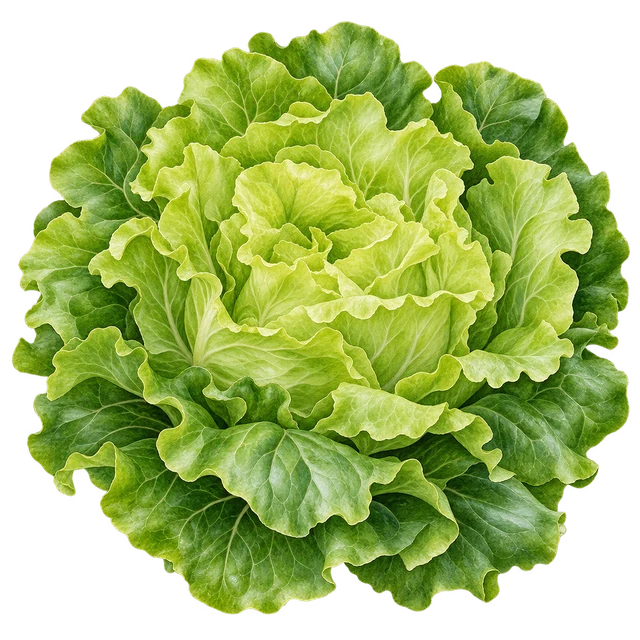
Cultivated garden lettuce, Lactuca sativa: chiefly the edible leaves of romaine, butterhead, iceberg and loose-leaf types. Stem and oilseed cultivars are identified separately in the heritage section. This is not wild lettuce, Lactuca virosa, or lactucarium.
Ingredient details, preparation and research
Also known as: Garden lettuce; Salad lettuce; Romaine lettuce; Cos lettuce; Butterhead lettuce; Iceberg lettuce; Loose-leaf lettuce; Lactuca sativa
Source plant or material
Lactuca sativa L.
Plant family / material: Asteraceae
Forms and route
Raw salad leaves and food wraps; selected stem-lettuce cultivars are cooked as vegetables. Seed oil and medicinal extracts are not equivalent to a bowl of leaves.
Vitamins and minerals
NIH ODS lists 14 micrograms of vitamin K in 1 cup of raw iceberg lettuce. This exact-form reference does not describe 1 cup of romaine, butterhead or red leaf lettuce, and it is not a nutrient ranking. The card deliberately avoids one generic nutrient panel for all lettuce types.
Absorption and preparation
Vitamin K is fat soluble and its absorption from leafy vegetables varies. Ordinary foods containing some fat can accompany lettuce; no special oil or large amount is required by this card.
Practical preparation
Remove spoiled leaves. Rinse loose leaves under running water and dry with a clean towel; follow ready-to-eat package directions. Keep refrigerated at 40°F / 4°C or below and separate from raw animal foods.
Combination context
Fat-containing meal ingredients can assist absorption of fat-soluble nutrients, but no special therapeutic pairing is established.
Combination notes
Use with a safely prepared filling, ordinary salad ingredients or a modest dressing according to taste. A wrap’s nutritional composition depends on the filling and sauce.
Traditional and reported uses
- Salads and sandwich leaves
- Lettuce wraps
- Cooked stem lettuce
- Regional oilseed-lettuce history
Contraindications and cautions
- Keep lettuce refrigerated and away from raw meat juices. Rinse loose leaves; ready-to-eat packaged greens can be used according to the label. Washing cannot remove every pathogen.
- If taking warfarin, maintain a consistent vitamin K intake and discuss large dietary changes with your clinician. Lettuce is not automatically forbidden.
- Do not substitute wild lettuce or concentrated latex products for food lettuce. Toxicity has been reported with Lactuca virosa; that report does not mean normal garden lettuce has the same risk.
- The sources reviewed here do not establish a serving of lettuce or homemade lettuce water as an insomnia or pain treatment.
Similar items and how they compare
- Wild lettuce, Lactuca virosa
Shares a genus and part of the common name.
It is a different species associated with latex preparations and reported toxicity; salad-food instructions do not apply.
- Stem lettuce / celtuce
A cultivated form of Lactuca sativa.
Selected for a thick edible stem rather than a familiar salad head; leaf-serving nutrient values do not describe its stem.
- Lettuce seed oil
Comes from oilseed cultivars.
A separate extracted food material, not nutritionally equivalent to leafy lettuce or evidence that latex is edible.
Taxonomy and food form both matter
Lactuca sativa is accepted by Kew. Lettuce research distinguishes several horticultural forms and wild relatives; sharing the genus does not make their edible parts or safety interchangeable.
Wild-lettuce reports cannot be transferred to salad
The 2009 case series concerns Lactuca virosa exposure. Neither its claimed sedative traditions nor its poisoning cases establish a benefit or expected risk for an ordinary serving of cultivated Lactuca sativa leaves.
One vitamin K value is not all lettuces
The iceberg reference is serving-specific. Keeping dietary intake consistent is important for people taking warfarin; abrupt avoidance or large increases should not be improvised.
Evidence limits
This card is about cultivated food forms. It does not evaluate every lettuce extract, sleep-product trial or historical latex preparation, and provides no medicinal dose.
Entry sources
- Kew POWO: Lactuca sativa, accepted name and cultigen origin
- Wei and colleagues (2021): Whole-genome resequencing of 445 Lactuca accessions and domestication history
- University of Minnesota: Lettuce, preparation and culinary uses
- Korea.net: Korean culinary practice of wrapping food in lettuce with kimchi and rice
- University of Illinois Extension: Fiesta Lettuce Wraps
- University of Hawaii CTAHR: Chinese Lettuce, stem lettuce and celtuce
- van Treuren and colleagues (2018): Metabolite variation in the lettuce gene pool
- Besharat and colleagues (2009): Wild lettuce (Lactuca virosa) toxicity, case series
- NIH ODS: Vitamin K, food reference servings, absorption and warfarin
- FDA: Selecting and Serving Produce Safely
Reference entry 279 · Recorded content review: 2026-10-09 · Review scope and dates