


Key cautions
- Keep culinary pepper separate from piperine supplements.
- Check brine and blends for added salt.
- Pepper is flavoring, not a home-preservation safety step.
What’s inside
Piperine contributes pungency; volatile aroma compounds and the plant’s food matrix also shape flavor. This card does not turn those constituents into a treatment or an absorption guarantee.
Uses in brief

- Everyday savory seasoning
- White pepper in pale sauces
- Green peppercorns in cooking
History, folklore and reported uses
History, folklore and traditional uses
Pepper has a long South Asian cultivation and trade history. Modern horticultural and agricultural accounts describe India and Sri Lanka in that history; this card does not use a disputed single-origin claim to define the spice.
Its journey to Roman dining tables is visible in material culture. The British Museum’s Hoxne pepper pot, dated to the fourth century CE, has an adjustable base for filling and sprinkling a costly table spice.
Traditional, historical and reported uses
- Everyday savory seasoning
Food or household practiceWhy this label?
Records a specific culinary preparation of the named material; this is a food-practice category, not evidence of a medical benefit.
India’s Spices Board records pepper as a finishing seasoning and a component of spice mixes. A little freshly ground pepper supplies pungency without requiring extra salt.
- White pepper in pale sauces
Food or household practiceWhy this label?
Records a specific culinary preparation of the named material; this is a food-practice category, not evidence of a medical benefit.
White pepper is used where the dark flecks of black pepper are unwanted; the Spices Board gives mayonnaise as an example. The visual choice comes from removing the fruit’s outer layer, not from a separate species.
- Green peppercorns in cooking
Food or household practiceWhy this label?
Records a specific culinary preparation of the named material; this is a food-practice category, not evidence of a medical benefit.
Green peppercorns are available preserved in brine or dried by processes that retain their color. The Spices Board describes freeze-dried green peppercorns rehydrating in liquid for whole-peppercorn cooking.
- Roman table-spice service
Historical recordWhy this label?
A named, dated archaeological object provides material evidence of table-spice service; the text preserves the limits of identifying its contents.
The British Museum’s Hoxne “Empress” pepper pot has filling openings and small dispensing holes. The catalogue connects the object with pepper imported from India; the vessel itself does not identify the botanical contents of every ancient spice pot.
4 distinct supported uses are featured. Historical objects and attributed practices are distinguished from medicinal efficacy; no fixed seven-use quota is imposed.
Historical-use additions reviewed 2026-10-09
Story sources
Regional reading paths
These sourced notes describe cultivation, trade, food traditions or material history. A regional connection does not claim exclusive origin.
Asia
Cultivated: southern India; regional spice trade.
Dried berries season food.
Identity & detailed reference
Identity
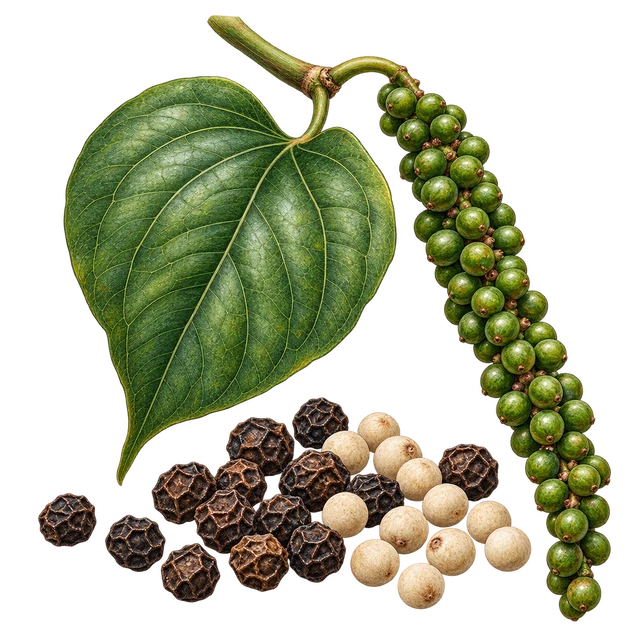
The fruit of the tropical climbing vine Piper nigrum. Black, white and green peppercorns are differently harvested or processed forms of the same species, rather than three pepper species.
Ingredient details, preparation and research
Also known as: Black pepper; White pepper; Green peppercorns; Piper nigrum; Kali mirch
Source plant or material
Piper nigrum L.
Plant family / material: Piperaceae
Forms and route
Whole or ground black pepper; white pepper with its outer fruit layer removed; green peppercorns preserved in brine or processed to retain their green color. Piperine capsules and pepper extracts are separate concentrated products.
Vitamins and minerals
No numerical vitamin, mineral or fiber claim is assigned to a small pepper seasoning portion. The relevant form may be dried whole fruit, decorticated white pepper, or a salted green-peppercorn product; their compositions are not identical.
Absorption and preparation
Piperine is studied and marketed as a bioavailability modifier, but increasing exposure is not automatically beneficial and can change medicine effects. Supplement findings do not establish a reliable nutrient-absorption benefit from a dash of pepper on food.
Practical preparation
Choose the black, white or green form the recipe calls for. Grind dried peppercorns as needed. Use preserved green peppercorns according to the label and check any storage instructions after opening.
Combination context
No specific pepper-and-turmeric pairing or amount is recommended here to change absorption.
Combination notes
Pepper can season a meal alongside herbs and other spices. Plain pepper offers flavor without added salt, while salted blends and brines need a separate label check.
Traditional and reported uses
- Everyday savory seasoning
- White pepper in pale sauces
- Green peppercorns in cooking
- Roman table-spice history
Contraindications and cautions
- Piperine or pepper-extract supplements can alter medicine exposure. If you take medicines, ask a pharmacist or prescriber before using concentrated products; ordinary seasoning is a different exposure.
- Use the food product as labeled. Brined green peppercorns and seasoning blends can contain added salt; the finished product is not nutritionally identical to plain dried pepper.
- Pepper’s use in pickling or food processing does not make an improvised recipe shelf-stable. Follow a tested preservation method rather than relying on spice as a disinfectant.
Similar items and how they compare
- Black, white and green pepper
All can come from Piper nigrum.
Black retains a dark dried outer layer, white has that layer removed, and green is processed to retain its color. Processing and flavor differ.
- Piperine or black-pepper extract
Contains or concentrates a constituent present in pepper.
An isolated or enriched dose is not equivalent to seasoning food and may interact with medicines.
- Chili or cayenne pepper
Also called pepper and used for pungency.
Capsicum fruits are botanically different from the Piper nigrum vine and should not inherit its identity or extract claims.
Color follows harvest and processing
Black pepper is dried with the outer layer intact; white pepper is obtained by removing that layer; green peppercorns are preserved or dried to prevent the usual darkening. Those distinctions concern Piper nigrum fruit, not interchangeable supplements.
Concentrated piperine can change medicine exposure
BfR distinguishes isolated piperine boluses in supplements from normal dietary intake and reports human evidence of medicine interactions. Do not deliberately combine a supplement with medication to make that medication “stronger.”
Culinary tradition is not a clinical indication
The Spices Board also describes a place for pepper in Indian medicine. That contextual mention does not establish a safe medicinal dose, a disease-treatment benefit or an effect from an ordinary meal.
Evidence limits
This card covers Piper nigrum food forms. It does not establish clinical treatment effects or equate food seasoning with isolated piperine. Green-peppercorn brine, spice mixtures and extracts must be judged as their actual products.
Entry sources
- Kew POWO: Piper nigrum L., accepted name and distribution
- Spices Board India: Pepper, commercial fruit and culinary applications
- Spices Board India, Spice India April 2009, pp. 10–11: Black, white and green pepper processing
- Missouri Botanical Garden Plant Finder: Piper nigrum
- German Federal Institute for Risk Assessment: Supplements in older age, piperine and medicine interactions
- British Museum: Hoxne Empress pepper pot, 1994,0408.33, circa 300–400 CE
- University of Florida IFAS: Shopping for Health, Herbs and Spices
Reference entry 274 · Recorded content review: 2026-10-09 · Review scope and dates