


Key cautions
- Avoid “black henna” skin products and unexplained darkening additives: PPD can cause severe allergic skin reactions. Natural henna can also cause reactions.
- Avoid henna exposure in known G6PD deficiency, particularly in infants and children; serious haemolysis has followed topical use. Do not apply henna to infants.
What’s inside
Lawsone, a naphthoquinone dye, is responsible for the characteristic orange-to-reddish-brown colour. Plant precursors release lawsone, which binds to hair proteins. Leaf polyphenols and the fragrant flower fraction are separate from this principal colouring action.
Uses in brief

- Traditional hair colouring, skin decoration and textile dyeing using the leaves.
- Fragrant flowers have a separate perfume history; leaf applications also appear in folk skin care.
In the King James Bible
In the King James Bible
Probable botanical identification
Song of Solomon compares the beloved to a cluster of “camphire” at Engedi and places it among garden aromatics. The usual botanical identification is fragrant henna, Lawsonia inermis. Camphire here is distinct from camphor; henna’s flower fragrance and its leaf-dye preparations are different uses of the plant.
My beloved is unto me as a cluster of camphire in the vineyards of Engedi.
Song of Solomon 1:14 (KJV)
Thy plants are an orchard of pomegranates, with pleasant fruits; camphire, with spikenard,
Song of Solomon 4:13 (KJV)
Scripture and identification sources
Words & their stories
WORDS & THEIR STORIES
The name behind the KJV
Biblical Hebrew · Song of Solomon 1:14 (KJV)
הַכֹּפֶרhakkōper
The henna, rendered “camphire,” in a fragrant cluster.
Dictionary form: כֹּפֶר · kōper
Ha- is the definite article. This plant sense is distinct from other words spelled kōper.
Biblical Hebrew · Song of Solomon 4:13 (KJV)
כְּפָרִיםkəpārīm
Henna plants, among the garden’s valued plants.
Dictionary form: כֹּפֶר · kōper
The form is plural.
What the language reveals
Blossoms in the poem
The cluster image fits the fragrant flowers described under the plant sense in Brown–Driver–Briggs. The verses do not describe preparing henna dye.
Henna is the conventional identification. KJV “camphire” is not an identification of camphor crystals or camphor essential oil.
Language and identification bibliography
History, folklore and reported uses
History, folklore and traditional uses
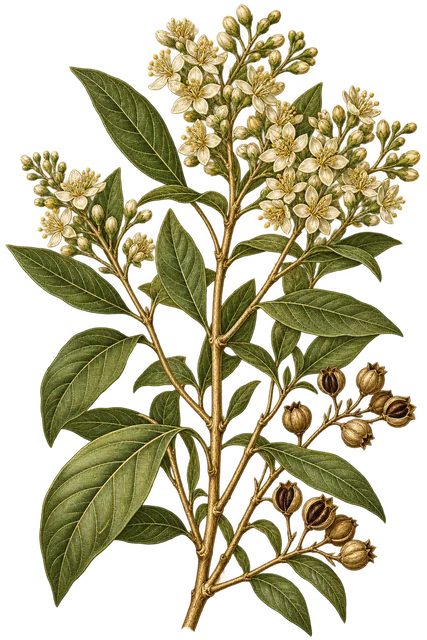
A cluster of camphire in the vineyards of Engedi is one of the intimate plant images in the Song of Solomon. Here the name points to henna, a shrub with small fragrant flowers, rather than to camphor. The image makes more sense when we remember the living flowering plant as well as the familiar powder: the perfume belongs to the flower, while the lasting reddish stain comes principally from the leaves.
Across parts of Africa and Asia, those leaves became tools of both everyday grooming and celebration. Kew records hair colouring, fabric dyeing and elaborate wedding skin art in Hindu, Muslim and Sikh traditions. The same plant also entered local skin-care practices. Modern “black henna” adds a different chapter: products may contain powerful synthetic dyes, so the cultural history of henna should never be used to assume that every product bearing its name has the same ingredients or risks.
Traditional, historical and reported uses
- Wedding and ceremonial skin art
Food or household practiceWhy this label?
Ceremonial cosmetic skin decoration with leaf paste.
Kew documents leaf-paste designs used in wedding traditions among Hindu, Muslim and Sikh communities. These meaningful temporary decorations are a cultural use; local cosmetic rules and product safety still matter.
- Hair and beard colouring
Food or household practiceWhy this label?
Cosmetic hair and beard dyeing; no research outcome is claimed.
Powdered henna leaves have long coloured hair and beards in reddish-brown shades. This is a leaf-dye practice, separate from using the flowers as perfume or adding black synthetic dye.
- Textile and leather dyeing
Food or household practiceWhy this label?
Practical textile and leather dyeing.
Singapore’s National Parks record henna leaf paste used on silk, wool and leather. These material uses show that the plant’s colouring history extended beyond personal cosmetics.
- Flower perfumery
Food or household practiceWhy this label?
Flowers and fruits used in perfumery.
The flowers, and in some records the fruits, were used in perfumery. This gives a distinct aromatic context for the flowering camphire in the Song of Solomon; a flower fragrance is not interchangeable with lawsone-rich leaf powder.
- Traditional astringent skin care
Traditional accountWhy this label?
Indian folk skin-remedy practice; haemolysis paper supplies safety context.
NParks records henna leaves in Indian folk practice as astringent applications for skin complaints. This is a documented tradition, not a recommendation for infected skin, infants or people with G6PD deficiency.
- Tinting Persian manuscript paper
Historical recordWhy this label?
Transcribed historical Persian treatises document a specific bookmaking recipe.
The Persian Manuscript Materials project transcribes historical Persian treatises describing henna-leaf dye for writing paper, sometimes combined with saffron or ink. This bookmaking application is distinct from textile and leather dyeing.
- Ceremonial decoration of livestock
Food or household practiceWhy this label?
Attributed livestock decoration and festival custom.
Encyclopaedia Iranica records henna colouring of horses’ manes, tails and bodies in Persia, including Nowruz customs in Shiraz and a seventeenth-century account by Chardin. This is an attributed decorative tradition, not veterinary treatment or advice to colour animals.
Historical-use additions reviewed 2026-10-08
Story sources
- Royal Botanic Gardens, Kew: Henna tree
- Singapore National Parks: Lawsonia inermis
- FDA: Temporary tattoos, henna/mehndi and black henna
- Raupp et al. (2001): Henna causes life-threatening haemolysis in G6PD deficiency
- Dallmann et al.: Reinventing henna, enzyme-catalysed colour release from stabilized Lawsonia extracts
- Perinet et al. (2011): Haemolytic anaemia after ingestion of henna decoction with G6PD deficiency
- Lytton John Musselman, Old Dominion University: Henna
- The King James Bible: Project Gutenberg ebook 10
- Barkeshli and Zekrgoo: Persian Manuscript Materials, henna recipes
- Houshang Alam: Henna, Encyclopaedia Iranica
Regional reading paths
These sourced notes describe cultivation, trade, food traditions or material history. A regional connection does not claim exclusive origin.
Africa
Cultural and cultivated: North African henna adornment and celebration traditions are documented in the UNESCO inscription, including Algeria, Egypt, Mauritania, Morocco, Sudan and Tunisia.
Leaf-derived dye for hair, textiles and ceremonial adornment; fragrant flowers are a different material. Avoid adulterated “black henna.”
Identity & detailed reference
Identity
Henna is Lawsonia inermis, a flowering shrub or small tree. Biblical camphire is generally identified with henna; it is not camphor from Cinnamomum camphora. Fragrant flowers and dye-bearing leaves are different materials.
Ingredient details, preparation and research
Also known as: Camphire (KJV); Mehndi
Source plant or material
Henna is Lawsonia inermis, a flowering shrub or small tree. Biblical camphire is generally identified with henna; it is not camphor from Cinnamomum camphora. Fragrant flowers and dye-bearing leaves are different materials.
Plant family / material: Lythraceae (loosestrife family)
Forms and route
Dried or powdered leaves in hair-colouring products and traditional cosmetic pastes; flowers used for fragrance. “Black henna” may contain added dyes such as PPD and is not simply darker natural henna. Flower perfume is not leaf dye, and neither is an oral supplement.
Vitamins and minerals
Henna cosmetics supply no dietary nutrient serving. Leaves contain plant compounds, but swallowing a cosmetic powder or decoction is not a safe way to obtain vitamins or minerals. Flower perfume likewise has no nutritional contribution.
Absorption and preparation
Colouring depends on local contact and lawsone binding to keratin; it is not improved by eating henna. Skin exposure is not automatically harmless: systemic haemolysis has occurred after topical use in children with G6PD deficiency. No absorption-enhancing recipe is recommended.
Traditional and reported uses
- Traditional hair colouring, skin decoration and textile dyeing using the leaves.
- Fragrant flowers have a separate perfume history; leaf applications also appear in folk skin care.
Contraindications and cautions
- Avoid “black henna” skin products and unexplained darkening additives: PPD can cause severe allergic skin reactions. Natural henna can also cause reactions.
- Avoid henna exposure in known G6PD deficiency, particularly in infants and children; serious haemolysis has followed topical use. Do not apply henna to infants.
- Do not swallow henna powder, dye, perfume or decoctions; medicinal use is especially inappropriate during pregnancy without qualified care.
- Follow the actual hair product’s safety instructions. In the United States, henna is approved as a hair colour additive, not for direct skin decoration.
Similar items and how they compare
- Camphor
Its English name is easily confused with KJV camphire.
Camphor is a different material; camphire in Song of Solomon refers to henna.
- Indigo dye
Another traditional botanical colouring material.
Henna supplies a reddish-brown dye; a black or blue product may involve another plant or added chemicals.
Plant and biblical name
Lawsonia inermis belongs to Lythraceae. The KJV’s camphire is interpreted as henna; the similar-looking word camphor names a chemically and botanically different material. The biblical verses describe the plant among gardens and fragrant clusters.
Leaves, flowers and dye chemistry
Modern colour-release research studies lawsone and its precursors in henna extracts. Lawsone binds to protein in hair fibres. The colouring action concerns the leaf-derived material; the fragrant flowers have a separate use.
Traditional use versus treatment evidence
The strongest practical basis for this entry is its documented dye and fragrance use. Ethnobotanical descriptions also list skin remedies, but they do not establish an effective, standardized treatment for a skin infection or disease.
Black henna and allergy
FDA warns that products marketed as black henna often contain PPD, which can produce dangerous skin reactions and sensitization. Even a brown product may contain additives, so colour alone does not verify the ingredient list.
G6PD deficiency is a different risk
A clinical case series described severe haemolysis in four G6PD-deficient children following topical henna, including one death. The concern is not limited to PPD-containing black henna; leaf constituents can also matter.
Nutrition, absorption and oral use
This is not a food-based nutrient source. Cosmetic staining is local protein binding, while the poisoning reports show why “external” does not mean zero systemic risk. An oral henna decoction has also caused haemolytic anaemia in G6PD deficiency.
Evidence limits
- Biblical identification is traditional/probable rather than a modern botanical specimen determination.
- Cosmetic colouring evidence does not establish medicinal efficacy.
- Commercial products vary; added dyes can change the risk substantially.
Entry sources
- Royal Botanic Gardens, Kew: Henna tree
- Singapore National Parks: Lawsonia inermis
- FDA: Temporary tattoos, henna/mehndi and black henna
- Raupp et al. (2001): Henna causes life-threatening haemolysis in G6PD deficiency
- Dallmann et al.: Reinventing henna, enzyme-catalysed colour release from stabilized Lawsonia extracts
- Perinet et al. (2011): Haemolytic anaemia after ingestion of henna decoction with G6PD deficiency
- Lytton John Musselman, Old Dominion University: Henna
- The King James Bible: Project Gutenberg ebook 10
- Barkeshli and Zekrgoo: Persian Manuscript Materials, henna recipes
- Houshang Alam: Henna, Encyclopaedia Iranica
Reference entry 118 · Recorded content review: 2026-10-06 · Review scope and dates