

Fresh plantain
leaf poultice
A simple traditional preparation for temporary comfort after one small mosquito bite on an adult’s intact skin.
Single use · About 5–10 minutes of skin contact · Traditional-style household example
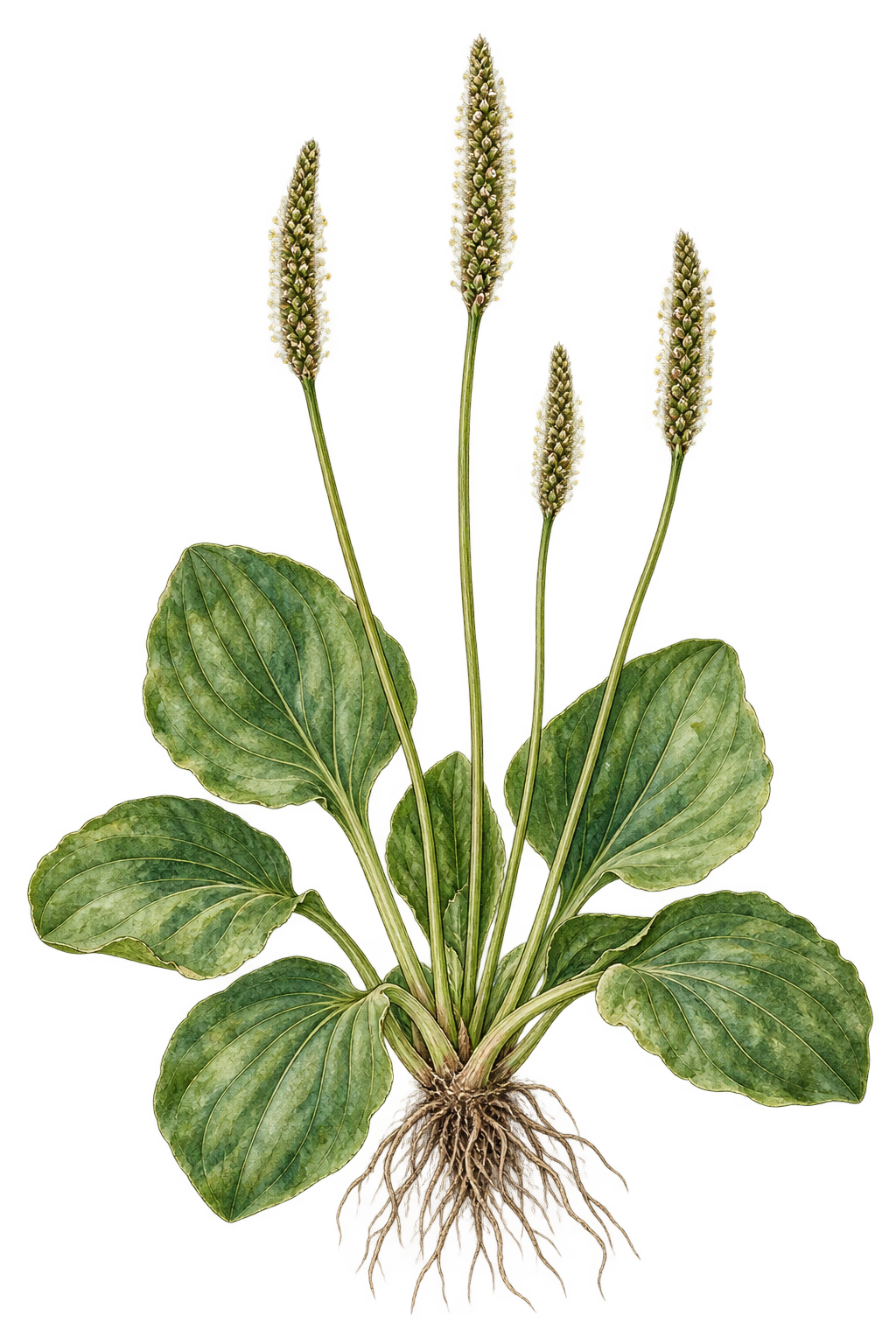
Before you begin
Use only reliably identified, clean, unsprayed Plantago major leaves. Fresh washed leaves are not sterile. Avoid known plantain allergy, broken or infected skin, eyes and mucous membranes. This example is not for tick bites, venomous bites or serious reactions.
Seek medical advice for increasing heat, pain, spreading redness, pus or fever. Breathing trouble, faintness or sudden mouth, tongue or throat swelling requires emergency help.
Method
Wash
Wash your hands and utensils. Gently wash the bite with soap and water, then pat dry. Rinse the leaves under clean running water.
Crush
Finely chop and crush the leaf with a clean spoon or mortar. Add 2–3 drops of clean drinking water only if needed to make a moist mash. Do not chew the leaves.
Apply briefly
Place a thin dab over the small bite and hold loosely with clean gauze for 5–10 minutes. These quantities and contact time are a household adaptation, not established medicinal doses.
Remove
Remove the mash, rinse gently and pat dry. Stop sooner and rinse if burning, increasing itch, redness, swelling or rash develops.
Discard
Discard all the mash immediately. Make only what you will use now; do not store it or leave it on overnight.
My pick
Start with gentle washing and a cold pack wrapped in cloth for 10 minutes. If you choose the fresh-leaf tradition, keep it simple, brief and single-use. Cool, moist contact may account for some comfort; the poultice has not been shown to outperform a plain cold compress.
Sources and context
- NC State Extension: Plantago major identity, family and traditional leaf uses
- Chiocchio et al. (2024): Ethnobotanical field survey in Bologna district, Italy
- CDC: Mosquito-bite care, washing and a 10-minute ice pack
- NHS: Insect-bite care, pharmacy options and warning signs
- FDA: Microbial contamination risks in water-containing cosmetic preparations